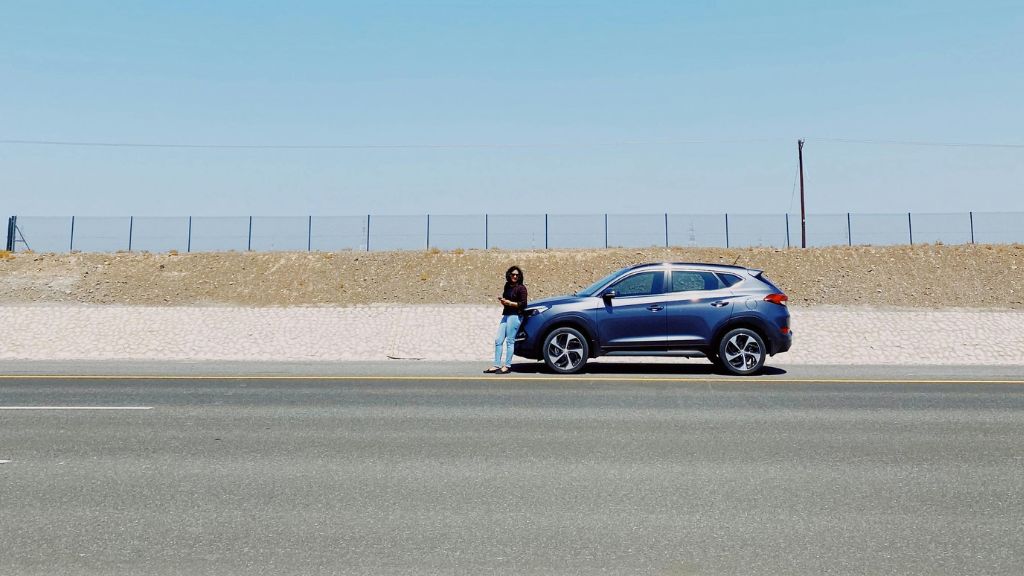
| I had owned my new Maruti Brezza for exactly 23 days when I decided to drive from Indore to Udaipur. The car had 1,840 km on the odometer. My longest drive in it until that point had been 34 km – a round trip to a shopping mall. This is the story of how that trip went, what I was completely unprepared for, and what I would do differently. |
The decision to go to Udaipur was impulsive in the way that most good decisions are. A long weekend appeared on the calendar. The car was sitting in the parking lot looking clean and unused. My partner suggested the trip on a Tuesday evening. By Thursday morning we were loading bags into the boot.
The distance from Indore to Udaipur is approximately 280 km. The route primarily follows NH52 through Rajasthan – a road I had driven in a rented car twice before and found to be perfectly manageable. What I had not done before was drive MY car on a highway. Not a rented car where someone else absorbs the risk. My car, with my bank loan still very much in progress, on a road where trucks, cattle, and the occasional surprise speed breaker are all part of the experience.
It felt different. Different in a way I had not anticipated.
The Preparation – What I Did and What I Should Have Done
I am reasonably organised and I knew roughly that pre-trip car checks were important. So the evening before departure I checked the tyre pressure, topped up the windshield washer fluid because the bottle was sitting on my workbench from a recent purchase, and confirmed the fuel tank was full. I also made sure the spare tyre was in the boot, which it was.
What I did not check: whether the spare tyre was inflated. I know. I found out when we stopped to check on something else about 40 km from Indore and I opened the boot to access the spare just to look at it. It was soft – not flat, but nowhere near the pressure it should have been. A spare tyre that is unusable in an emergency is arguably worse than knowing you do not have one, because it creates false confidence.
I have since learned to add spare tyre pressure check to any pre-trip routine. It takes 30 seconds with a gauge. The two times I have found the spare underinflated have been enough to make it automatic.
The other thing I did not check: the brake pads. At 1,800 km a new car’s brakes are obviously fine, but having a sense of the brake feel before a long drive is useful. The Brezza’s brakes are good but they felt slightly different to me at highway speed than they did in city use – a more progressive feel that took about an hour of driving to become comfortable with. Knowing this beforehand would have been useful.
The Drive – Reality vs Expectation
We left at 6:15 in the morning, which was the right call and something I would do again without hesitation. The first two hours of the drive, from Indore until past Mhow, were the best conditions I have ever driven in India. Empty roads, cool air, minimal trucks, and the kind of smooth progress that makes you understand why some people genuinely love driving.
That changed gradually as the sun came up and the road filled. By 9:30 we were in the section between Maheshwar and the Rajasthan border where the road surface deteriorated noticeably. Not badly – this is an NH, not a rural road – but enough that my comfortable 90 km/h dropped to 70, and then to 60 on some stretches where the surface was genuinely rough.
I want to be honest about the truck situation because every person I know who drives on Indian highways has a strong opinion about it and mine is nuanced. The trucks are slow, they often occupy the right lane when they should not, and overtaking one on a two-lane stretch requires more anticipation and patience than city driving prepares you for. But they are also predictable once you understand their behaviour. They move slowly, they signal erratically but they do signal, and they generally do not do sudden things. The danger is not the truck – it is the driver behind the truck who loses patience and overtakes at exactly the wrong moment.
I overtook conservatively on that trip. More conservatively than necessary, probably. But at 1,840 km on a new car on my first proper highway drive, conservative was exactly right.
The Fuel Reality
I had planned to fill up just before the Rajasthan border, based on rough mileage calculations and what I thought the fuel economy would be. I had been seeing 15 to 16 km/l in city use and expected highway figures to be better. The Brezza’s petrol 1.5-litre on this trip gave me 17.8 km/l door to door, which is slightly below the ARAI figure but entirely reasonable for mixed driving with AC running continuously.
The fuel stop I planned happened at a clean, well-organised HP station just past the state border. Good call – the two stations I passed before it were technically open but looked like they had last been cleaned during a previous government’s administration. On unfamiliar highways, busy-looking stations with multiple pumps are generally the better choice. Turnaround is higher, fuel is fresher, and the probability of finding a clean toilet, which matters more on a road trip than on any commute, is considerably better.
What Udaipur Was Like and What the Return Drive Taught Me
Udaipur was everything it is supposed to be. The lake, the light in the afternoon, the food at the places that were not the obvious tourist traps – all good. Two nights felt like enough to properly be there without rushing.
The return drive on Sunday was harder. Traffic was heavier. We left later than planned because we underestimated how long it takes to actually leave a place you are enjoying. And I was tired in a way I was not on the way there – the accumulated effect of two days of tourist walking, less sleep than usual, and the anticipatory excitement that makes the outward journey easier.
Highway driving while tired is genuinely more dangerous than highway driving while fresh and I felt this concretely on the return. We stopped at a dhaba about 80 km from Indore for strong tea and a 20-minute walk around. That stop probably added 25 minutes to the journey and subtracted a meaningful amount of risk from it. I now build mandatory stops into any drive above 4 hours regardless of whether I feel tired.
The Costs – What the Trip Actually Came To
| Expense | Amount |
| Fuel (Indore → Udaipur → Indore, ~560 km) | Rs. 2,980 |
| Toll charges (both ways) | Rs. 680 |
| Parking in Udaipur (2 nights) | Rs. 240 |
| Roadside tea and snacks (4 stops) | Rs. 380 |
| Total car-related trip cost | Rs. 4,280 |
The car cost of Rs. 4,280 for a two-person trip to Udaipur and back is, by any measure, reasonable. The same trip by train would have been cheaper – but would not have included the flexibility of leaving when we wanted, stopping where we wanted, and having the car available in Udaipur itself. For us, the car added genuine value to the trip rather than just being a transport method.
What I Would Do Differently
- Check spare tyre pressure before every long drive – 30 seconds, adds real safety margin
- Leave even earlier – 5:30 instead of 6:15 would have given us another hour of empty roads
- Plan one mandatory stop every 2 hours regardless of fatigue level – not optional, not ‘if I feel tired’
- Research the road surface condition for unfamiliar stretches – Google Maps satellite view shows rough sections better than the road name implies
- Book the return petrol fill earlier – the last 40 km before a city on a Sunday evening can have queues at good pumps
The car handled everything asked of it without complaint. The Brezza’s suspension was comfortable enough on the rough stretches, the AC was effective throughout, and the infotainment’s navigation worked accurately. None of that surprised me. What surprised me was how much the trip itself taught me about driving my own car – the feel of it at speed, how it brakes, how it responds to a sudden lane change. Those things you only learn on road. A thousand km of highway tells you more about your car than ten thousand km of city driving.
Frequently Asked Questions
Q: How should I prepare my car for a first road trip in India?
Check all five tyre pressures including the spare. Verify engine oil level with the dipstick. Check coolant level when engine is cold. Make sure all lights work including brake lights. Fill washer fluid. Confirm the jack and lug wrench are in the boot with the spare. Check fuel before leaving and identify your first fill stop on the route. These checks take 15 minutes and are worth every one of them.
Q: What is the best time to start a road trip from an Indian city?
Between 5 and 6 in the morning is genuinely the best window for leaving most Indian cities. Traffic is minimal, the air is cooler, and you cover the first 100 to 150 km in conditions that are significantly better than any other time of day. The mental and physical ease of the first two hours sets the tone for the whole trip.
Q: How much does fuel cost for a 300 km road trip in India?
At current petrol prices around Rs. 95 to Rs. 107 per litre depending on the city, and assuming a reasonable highway fuel economy of 16 to 18 km/l for a mid-size petrol car, a 300 km one-way trip costs approximately Rs. 1,600 to Rs. 2,000 in fuel. Add 15 to 20 percent for a return journey with more traffic. Diesel cars will be 15 to 20 percent cheaper per km. Budget Rs. 500 to Rs. 800 extra for tolls on most NH routes.