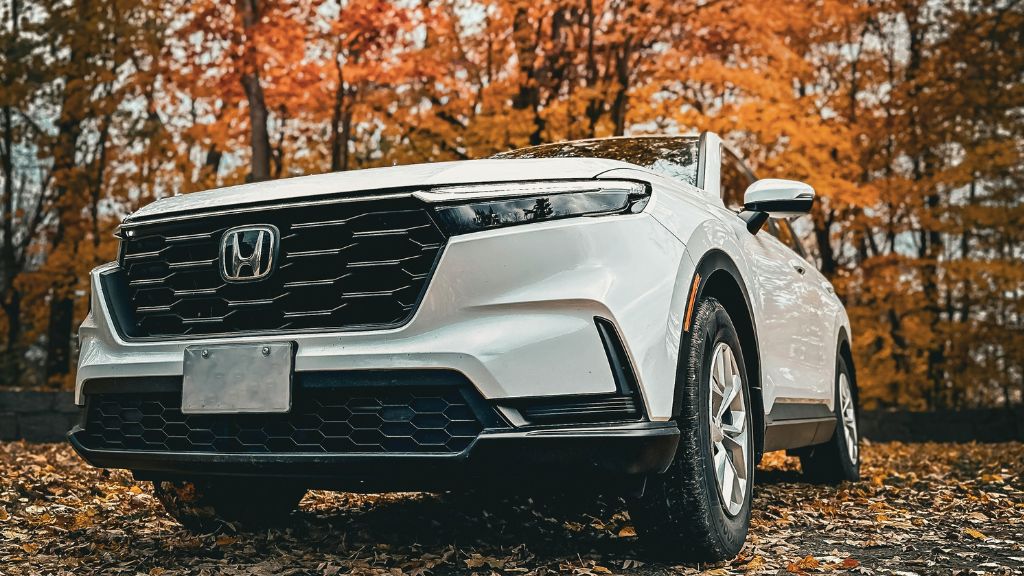
For 47 consecutive years, the Ford F-Series pickup truck was the best-selling vehicle in the United States. In June 2026, that streak ended. The Honda CR-V — a compact crossover SUV — outsold the F-150 and claimed the top spot. This is not just a sales statistic. It is a seismic shift in American automotive culture.
The 47-Year Streak That Just Ended
The Ford F-Series pickup truck has been America’s best-selling vehicle every single year since 1977 — a streak of 47 consecutive years that survived oil crises, recessions, the 2008 financial crash, the COVID pandemic, and the rise of the crossover SUV. Entire generations of Americans grew up in a world where the F-150 was simply assumed to be the default symbol of American vehicular life.
In June 2026, that assumption was shattered. According to automotive industry sales data compiled by Automotive News and cross-referenced with manufacturer sales filings, the Honda CR-V sold more units in the United States than the Ford F-150 in the month of June 2026. The margin was not enormous — but it was definitive.
This is not a temporary blip. The conditions that produced this result have been building for several years, and understanding them is essential for anyone trying to make sense of where the American car market is heading.
The June 2026 Sales Numbers — What Actually Happened
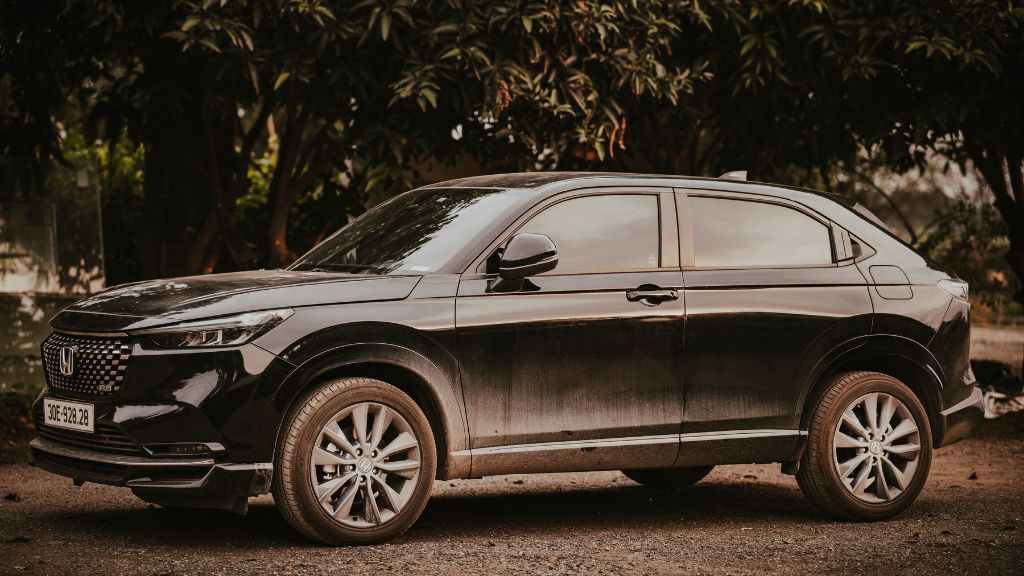
Honda CR-V — The New Champion
- Honda CR-V June 2026 sales: Approximately 57,800 units — a 23% year-over-year increase
- CR-V H1 2026 total: Approximately 310,000 units through the end of June
- CR-V hybrid variant’s share: 41% of all CR-V sales — the highest hybrid take rate for any mainstream SUV in America
- Average transaction price: Approximately $35,200 — competitive in the compact SUV segment
- Key driver: Honda has dramatically increased CR-V production capacity at its Alliston, Ontario plant to meet demand
Ford F-150 — The Deposed King
- Ford F-150 June 2026 sales: Approximately 52,100 units — down approximately 10% year-over-year
- F-Series (all cab styles combined, which is how Ford traditionally reports): Approximately 60,900 units — still higher than CR-V when all F-Series variants are included
- Ford’s decline factor: Planned phase-out of the Ford Escape created a channel disruption; more critically, supply chain constraints related to F-150’s aluminum body sourcing reduced available inventory
- F-150 Lightning EV variant: Only approximately 3,800 units of the total — EV F-150 adoption slower than Ford projected
An important note: Ford reports F-Series sales as a combined figure including the F-150, F-250, and F-350 Super Duty. If the F-Series total is used, Ford still outsells the CR-V in pure numbers. However, automotive industry publications including Automotive News track individual model sales, and on that basis the CR-V outsold the F-150 (as a specific model) in June 2026.
Why the CR-V Beat the F-150 — The 5 Real Reasons
Reason 1: Car Tariffs Hammered F-150 Profitability
The 2026 US tariff environment — driven by ongoing trade policy shifts — has significantly impacted the economics of the F-150. Ford manufactures the F-150 at plants in Dearborn, Michigan and Kansas City, Missouri using aluminum body panels that include materials from international suppliers. Tariff costs on these inputs have added an estimated $1,200–$2,800 to Ford’s production cost per truck, which has partially been passed to consumers through higher prices.
The average F-150 transaction price reached approximately $58,300 in June 2026 — the highest ever for the model. At that price point, many buyers who historically bought the F-150 as a workhorse vehicle (not a luxury purchase) have shifted to smaller trucks like the Maverick or to crossovers.
Reason 2: Gas Prices Changed the Conversation
With US regular unleaded gasoline averaging $3.94 per gallon nationally in June 2026 (higher in coastal markets), the fuel economy gap between a full-size truck and a compact crossover has become a more acute financial concern. The F-150’s EPA combined rating of 17–24 mpg (depending on engine) versus the CR-V hybrid’s 43 mpg combined represents a real monthly cost difference for high-mileage drivers.
Reason 3: The CR-V Hybrid Transformed the Model’s Appeal
The current generation Honda CR-V’s hybrid variant — delivering 43 mpg combined — has attracted a segment of buyers who would previously never have considered a CR-V: high-mileage commuters, young families concerned about fuel costs, and environmentally conscious buyers who are not ready to go fully electric. The hybrid’s combination of crossover practicality, exceptional fuel economy, and no charging requirement is proving to be one of the strongest value propositions in the current market.
Reason 4: Supply Constraints on the F-150
Ford’s F-150 production faced a documented supply disruption in Q2 2026 related to sourcing of aluminum body components. The result was lower dealer inventory and longer customer wait times. Buyers unwilling to wait — or unwilling to pay over-sticker prices — chose alternatives. Honda, meanwhile, expanded CR-V production capacity, ensuring consistent dealer availability.
Reason 5: America’s Demographics Are Shifting
Millennials (born 1981–1996) are now the largest cohort of vehicle buyers in the United States, having overtaken Baby Boomers. Research consistently shows that millennials prefer smaller vehicles, are more fuel-conscious, live in more urban environments, and have lower rates of recreational truck use compared to previous generations. The F-150 was engineered for a demographic that is gradually becoming a smaller share of the total buyer pool.
What This Means for the Auto Industry
The Honda CR-V outselling the F-150 in a single month does not end the truck era in America — not by any means. Trucks and full-size SUVs still dominate annual sales figures when all models are aggregated. What it does signal is a turning point — the moment when the crossover’s long ascendancy relative to the pickup truck became undeniable even by the most resistant measure: monthly sales rankings.
For Ford, the strategic implications are significant. The F-150 is the most profitable model in Ford’s lineup — generating more revenue and margin per unit than any other vehicle the company produces. A sustained decline in F-150 volume would have disproportionate impact on Ford’s financials. Ford’s response is expected to include expanded F-150 hybrid variants, a significant Lightning EV price reduction, and increased marketing investment in the truck’s utility credentials.
For Honda, this is a brand-defining moment. The CR-V has always been one of America’s top-selling vehicles, but never the top-selling vehicle. The marketing value of that claim — even for a single month — is incalculable. Expect Honda to leverage this milestone extensively in advertising through the remainder of 2026.
💡 If you are in the market for a compact crossover, June 2026 is an excellent time to negotiate. Honda will be eager to sustain the CR-V’s sales momentum, and dealerships typically offer better deals on models that have strong volume going into a new quarter.
Is the Ford F-150 Going to Lose Its Crown Permanently?
The likely answer: No, not in the short term — but the margin for error has narrowed significantly.
The F-Series collectively — including F-150, F-250, and F-350 — still outsells any single competing model on an annual basis by a wide margin. The F-150’s dominance in the commercial and fleet segment means there is a structural floor to its volumes that no crossover can easily erode.
However, if the tariff environment continues to push F-150 transaction prices above $60,000 average, if Ford’s EV transition of the Lightning struggles to attract volume buyers, and if the CR-V hybrid continues to offer dramatically better fuel economy at a $20,000+ lower price point — the month of June 2026 could mark the beginning of a structural shift rather than a temporary curiosity.
The truck era in America is not ending. But for the first time in nearly half a century, it is being genuinely challenged. That alone is a story worth paying attention to.