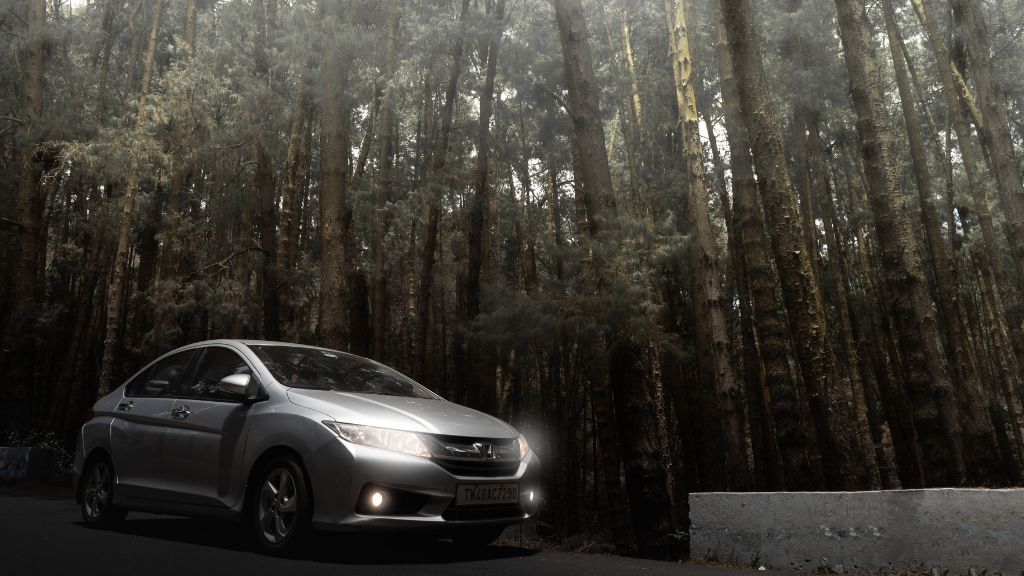
| My 2017 Honda City crossed 1,04,000 km last month. I have owned it since 38,000 km – bought second-hand in 2019, driven it through five Indian summers, three monsoons, and what felt like an unreasonable number of potholes. This is what I learned. |
When I bought the City at 38,000 km, a well-meaning friend told me I was buying someone else’s problem. He was not entirely wrong – I was also buying a car that had already depreciated its steepest portion, had a proven reliability track record at that mileage, and cost Rs. 2.7 lakh less than the equivalent new car. Whether those advantages outweighed the risks depended on what happened next. Here is what happened next.
Sixty-six thousand kilometres later, I can tell you with some precision what a Honda City costs to own through its second life in India – what breaks and when, what holds up better than expected, what the total maintenance bill looks like, and what I would do differently with the knowledge I now have.
The Parts That Held Up Better Than I Expected
The engine. This is the most important one and it is worth stating clearly. The City’s 1.5-litre i-VTEC engine at 1,04,000 km runs exactly as it did when I bought it at 38,000. No oil consumption issues. No unexpected noises. No power loss detectable in everyday driving. Honda’s engineering reputation in India is not marketing – it reflects something real about how these engines are built and what they are capable of over time.
The air conditioning. The compressor, which is the most expensive single AC component and the one most likely to fail in India’s heat, has not been touched in 66,000 km of my ownership. I had the refrigerant topped up once at around 75,000 km total – a small leak had developed at a pipe fitting which was fixed for Rs. 2,200 total. That is the only AC expenditure in six years. In Indian summer conditions with the AC running eight to nine months a year, this is genuinely good reliability.
The automatic transmission. This one genuinely surprised me. Automatic transmissions in India have a reputation for requiring attention – the heat, the stop-start traffic, the occasional aggressive use. The City’s torque converter automatic has been serviced with a fluid flush at 75,000 km and is otherwise untouched. It shifts smoothly, does not slip, and shows no signs of complaint.
The Parts That Did Not
The suspension. This is where the car has spent most of its maintenance budget in my ownership. The front lower arm bushings went at around 65,000 km- not dramatically failed but worn enough to produce a noticeable thud on rough roads and a slight vagueness in steering response. Replacement cost: Rs. 4,800 for parts and labour. The rear shock absorbers were replaced at 89,000 km when the car started feeling noticeably floaty on bad roads – Rs. 7,200 for a quality aftermarket pair. These are not unexpected failures for an Indian car at this mileage. Indian roads are genuinely hard on suspension components in a way that European mileage equivalents are not.
The battery. Two replacements in my six years of ownership – one at 62,000 km total (the original Exide had lasted to that point, reasonable) and one at 95,000 km when the second battery, also Exide, failed more suddenly than the first. The second failure happened on a particularly hot April day when the car had been parked in direct sun for four hours. Indian summer heat kills batteries. Rs. 4,400 each replacement – at an authorised dealer, not a roadside shop, because battery quality variance in India is real and meaningful.
The brake discs. Replaced front discs and pads at 72,000 km total mileage. The pads were clearly due but the discs had warped – a common enough occurrence when aggressive braking heats discs that are then cooled quickly, which happens more than you might think in Indian traffic conditions where a near-emergency stop is followed by slow traffic flow. Front disc and pad replacement: Rs. 6,800 at an authorised Honda service centre.
The Numbers – What It Actually Cost
| Category | Cost Over 66,000 km of My Ownership |
| Scheduled services (8 services average Rs. 5,400) | Rs. 43,200 |
| Suspension repairs (bushings + rear shocks) | Rs. 12,000 |
| Battery replacements (2 times) | Rs. 8,800 |
| Brake discs and pads | Rs. 6,800 |
| AC refrigerant top-up and leak fix | Rs. 2,200 |
| Tyres (1 full set at 80,000 km) | Rs. 18,400 |
| Miscellaneous (wiper blades, bulbs, misc) | Rs. 4,200 |
| TOTAL MAINTENANCE COST | Rs. 95,600 |
| Cost per km (maintenance only) | Rs. 1.45 per km |
Rs. 1.45 per km in maintenance cost over 66,000 km. At current petrol prices and 15 km/l real-world city mileage, fuel adds Rs. 6.20 per km. Combined ownership cost (not including purchase price, insurance, or depreciation): approximately Rs. 7.65 per km. For a car purchased second-hand at a significant discount from new, and which has been genuinely reliable and pleasant to drive throughout, these numbers feel acceptable.
What High Mileage in India Actually Means
One lakh kilometres in India is not the same as one lakh kilometres in Europe or Japan. Indian roads impose significantly more stress on suspension components per kilometre. The heat imposes more stress on batteries, AC systems, and rubber components. The fuel quality – while improved considerably since BS-VI – still varies more than in more regulated markets.
What this means practically: components that might last 1.5 lakh km in cleaner conditions and smoother roads will need attention at 80,000 to 1,00,000 km in India. This is not a defect in Indian-market cars – it is a calibration of expectations based on the actual environment. Planning for this, rather than being surprised by it, makes high mileage ownership significantly less stressful.
The other thing that high mileage teaches you is which maintenance you can defer and which you cannot. Wiper blades that are slightly worn are an inconvenience. Brake discs that are slightly warped are a safety issue. Suspension bushings that are slightly loose are a comfort issue that becomes a tyre wear issue that eventually becomes a handling issue. Learning to distinguish urgency levels – and having a mechanic you trust enough to tell you honestly – is one of the most valuable skills a car owner can develop.
Would I Buy a High Mileage Car Again?
Yes, with conditions. The condition being that the specific car has a documented service history, has been inspected by an independent mechanic, and belongs to a manufacturer with a strong reliability reputation in India. Honda, Maruti, and Toyota consistently produce cars that remain sound at high mileage if maintained properly. Some European brands do not-the parts cost premium on a high-mileage German car, even one that was well built originally, can make ownership genuinely expensive in India.
The City has been a good car. At 1,04,000 km it is showing its age in ways that are visible – slight wear in the door seals, small creaks from the dashboard on cold mornings, a slight roughness in the steering wheel grip despite my having used seat covers and a steering cover from early in my ownership. But it drives well, starts every morning without complaint, and costs me roughly what I expected to run. That is all you can really ask.
Frequently Asked Questions
Q: Is it worth buying a car with high mileage in India?
A high mileage car from a reliable Indian brand – Honda, Maruti, Toyota – can be excellent value if the service history is documented and an independent inspection confirms the mechanical condition. The key is understanding that certain components will need attention: suspension bushings and shock absorbers, battery, brake discs and pads, and timing chain or belt if not replaced. Getting these checked and factoring repair costs into the negotiated price makes high mileage buying sensible rather than risky.
Q: What typically breaks on Indian cars after 1 lakh km?
In Indian conditions, the components most likely to need attention between 80,000 and 1,20,000 km are: suspension bushings and ball joints (India’s roads are hard on rubber components), battery (heat degrades batteries faster than claimed life), front brake discs (warping from heat cycling is common), and cabin air filter and engine air filter (India’s dust loads are high). The engine and transmission, on quality Indian-market cars, typically remain sound well past these mileages if oil changes have been done on schedule.