Electric vehicles are no longer a niche curiosity reserved for tech enthusiasts and environmental advocates. In 2026, they represent one in every five new cars sold globally, and major markets including the United States are seeing record adoption numbers. Yet for many potential buyers, the inner workings of an EV remain mysterious. How does a car move without a combustion engine? Where does the energy come from? What happens when the battery runs low?
This guide answers every one of those questions in plain, accessible language. By the time you finish reading, you will understand exactly how an electric vehicle works – from the battery pack to the wheels – and feel confident making informed decisions about EV ownership.
The Core Difference: No Combustion, Just Electricity
A traditional gasoline car converts chemical energy stored in fuel into mechanical energy through controlled explosions inside cylinders. This process, called internal combustion, is inherently inefficient – roughly 60 to 70 percent of the energy in the fuel is wasted as heat, vibration, and exhaust.
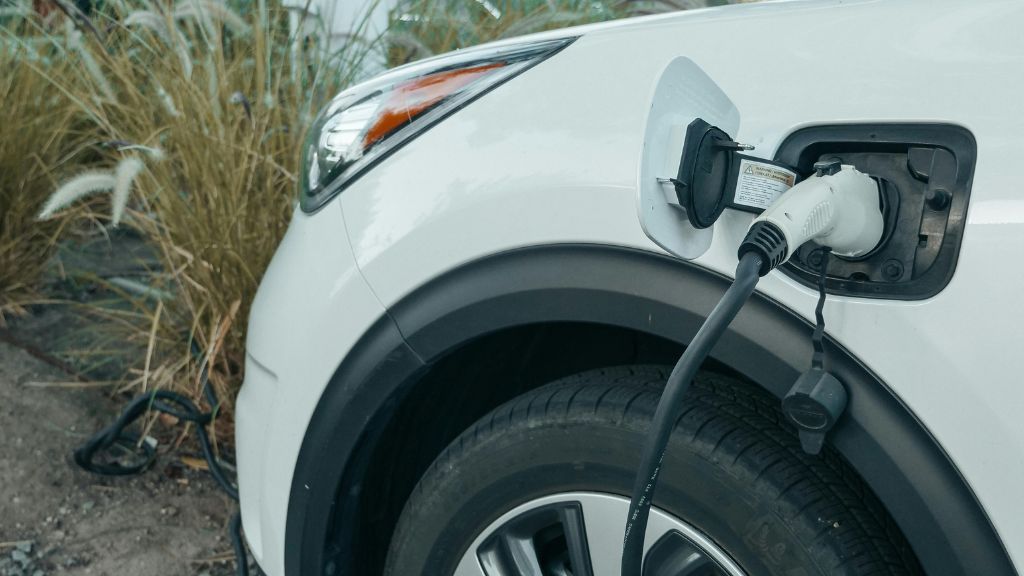
An electric vehicle skips combustion entirely. It stores electrical energy in a large battery pack and delivers that energy directly to one or more electric motors. Those motors convert electrical energy into rotational mechanical energy to spin the wheels. The efficiency of this process sits between 85 and 95 percent – meaning almost all the energy stored in the battery actually reaches the road.
The Battery Pack: The Heart of Every EV
The battery pack is the single most important and most expensive component in an electric vehicle. Modern EVs use lithium-ion batteries – the same fundamental chemistry found in your smartphone, but scaled up dramatically. A typical EV battery pack contains hundreds or even thousands of individual cylindrical or prismatic cells organized into modules, which are then grouped into the full pack.
Battery capacity is measured in kilowatt-hours, abbreviated as kWh. A larger kWh rating generally means longer range between charges. An entry-level EV might carry a 40 to 50 kWh battery providing 150 to 200 miles of range. A premium long-range variant might offer 100 kWh or more, pushing range past 350 miles.
Battery management systems – complex software and hardware working in concert – constantly monitor each cell’s temperature, voltage, and state of charge. These systems protect the battery from being charged too quickly, discharged too deeply, or operated at extreme temperatures, all of which would degrade the battery chemistry over time.
Electric Motors: Simpler Than You Think
Electric motors are mechanically simpler than combustion engines, but the simplicity does not imply lack of sophistication. An electric motor works by using the interaction between a magnetic field and an electric current to create rotational force, called torque. When current flows through coils of wire inside the motor, it generates a magnetic field that interacts with permanent magnets or electromagnets to push the rotor around.
What makes EVs feel so different to drive is the nature of that torque delivery. A gasoline engine produces peak torque only within a specific narrow RPM range – typically between 2,000 and 4,000 RPM. An electric motor produces maximum torque from zero RPM, meaning the full force is available the instant you touch the accelerator. This is why even modest electric vehicles feel surprisingly quick off the line.
Many EVs use a single motor driving either the front or rear axle. Performance models often employ dual-motor setups – one per axle – which provides all-wheel drive capability and dramatically increased power output. The Rivian R1T pickup truck, for instance, uses four individual motors, one at each wheel, enabling precise torque vectoring and extraordinary off-road capability.
Regenerative Braking: Turning Slowdowns Into Power
One of the most elegant features of electric vehicle technology is regenerative braking. In a conventional car, when you press the brake pedal, friction pads squeeze against rotors and convert your vehicle’s kinetic energy directly into waste heat. That energy is simply lost.
Electric vehicles can reverse their motors to act as generators when slowing down. As the motor resists the spinning wheels, it converts kinetic energy back into electricity and sends it back to the battery. This process recovers anywhere from 10 to 30 percent of the energy that would otherwise be lost to braking, meaningfully extending range in stop-and-go driving.
Drivers often describe one-pedal driving as one of the most satisfying aspects of EV ownership. By adjusting the regenerative braking strength, many EVs allow you to slow to a complete stop simply by lifting your foot from the accelerator – no need to touch the brake pedal at all in typical driving.
Charging: Level 1, Level 2, and DC Fast Charging
Understanding charging levels is essential for comfortable EV ownership. Level 1 charging uses a standard 120-volt household outlet and delivers roughly 4 to 5 miles of range per hour of charging. This is perfectly adequate if your daily driving totals less than 40 miles and you can charge overnight, but it will frustrate anyone who needs to recover significant range quickly.
Level 2 charging requires a 240-volt circuit – the same type used by dryers and ovens – and delivers between 20 and 30 miles of range per hour depending on the EV and charger. Most EV owners who charge at home install a Level 2 charger in their garage. A full charge from near-empty typically takes 8 to 12 hours, easily accomplished overnight.
DC fast charging, sometimes called Level 3 or DCFC, bypasses the vehicle’s onboard charger entirely and delivers direct current at very high power levels – anywhere from 50 kW to over 350 kW depending on the station and vehicle capability. At a 150 kW charger, many modern EVs can recover 150 to 200 miles of range in roughly 20 to 30 minutes. Tesla’s Supercharger network, Electrify America, and EVgo are the primary fast-charging networks in the United States.
Range Anxiety: Real Concern or Overstated Fear?
Range anxiety – the fear of running out of charge before reaching a destination – is perhaps the most commonly cited barrier to EV adoption. In 2026, the reality for most buyers is considerably less stressful than the concept implies. The average American drives fewer than 40 miles per day, well within the capability of even the most affordable EVs currently on the market.
Real-world range does vary from the EPA-rated figure. Cold weather, highway speeds, aggressive acceleration, and running climate control all reduce range meaningfully. A vehicle rated for 250 miles might deliver 200 miles in cold weather at highway speeds. Planning longer trips requires awareness of charging station locations, though the US charging network has expanded dramatically and continues to grow rapidly.
Maintenance Advantages That Most People Overlook
Electric vehicles have dramatically fewer moving parts than combustion-engined cars. There is no oil to change, no timing belt to replace, no catalytic converter to fail, and no transmission fluid to monitor. This structural simplicity translates to genuinely lower maintenance costs over the vehicle’s lifetime.
The primary maintenance items on most EVs are tires – which wear faster due to the vehicles’ heavier weight and instant torque – cabin air filters, wiper blades, and brake fluid changes. The brake pads themselves last far longer than on conventional cars because regenerative braking handles most deceleration duties.
Is an EV Right for You in 2026?
An electric vehicle makes the most sense if you have access to home charging, drive a predictable daily route within the vehicle’s range, and want to reduce fuel costs. Electricity is substantially cheaper per mile than gasoline in virtually every US market, and the gap continues to widen as EV efficiency improves.
If you frequently drive long distances without predictable access to fast chargers, or if you live in an apartment without charging access, the calculus becomes more complicated. These challenges are real but diminishing as infrastructure investment accelerates. By 2026, federal requirements mandating chargers at regular interstate intervals will meaningfully reduce the friction of long-distance EV travel.
Electric vehicles in 2026represent mature, reliable, enjoyable technology. Understanding how they work removes the mystery and reveals what they truly are: a simpler, more efficient way to move people from place to place.