
| This is not a spec comparison between CNG and petrol. It is 12 months of real driving data – actual rupee savings, actual inconveniences, the moments I regretted the switch, and the moments I was glad I made it. Written from a daily driver’s perspective, not a reviewer’s. |
Twelve months ago, I converted my 2019 Hyundai Grand i10 from petrol to CNG. The decision was driven purely by petrol prices hitting Rs. 104 per litre in my city – a point where the daily cost of commuting had become genuinely painful. I had been putting off the CNG conversion for two years, telling myself it was too much hassle. Then one Tuesday morning I filled the tank for Rs. 2,400 and decided that was the last time.
The conversion cost me Rs. 21,500 at a government-authorised CNG kit installer – Sequential CNG system with a 60-litre cylinder in the boot. Here is everything that happened in the 12 months since, presented without the optimism of a buying decision or the bitterness of a mistake.
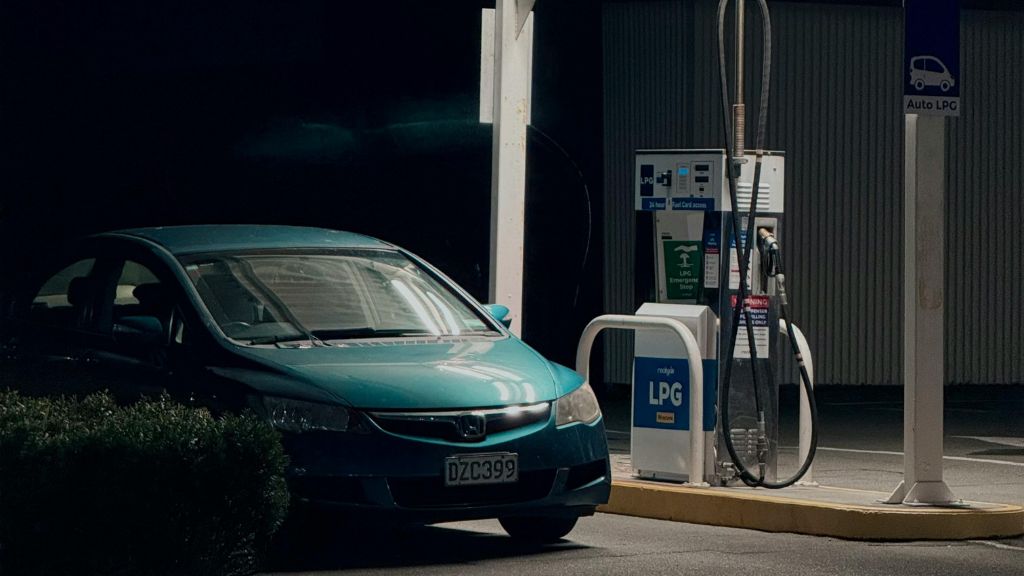
Month 1 – The Adjustment Period
The first thing I noticed after the CNG conversion was the smell. Not a bad smell – more like a faint chemical odour when starting on CNG. It goes away within a minute and I stopped noticing it after the first week. What I did not stop noticing was the power difference.
My Grand i10’s 1.2-litre petrol engine produces 83 PS on petrol. On CNG, the effective output drops to approximately 68–72 PS – a roughly 15% reduction. This is the physics of CNG: lower energy density per unit volume means less power from the same engine displacement. On city roads it is imperceptible. On a highway overtake or a steep incline, it is very much noticeable. I learned quickly to plan overtakes more carefully and drop a gear earlier on climbs.
The other first-month reality: boot space. The 60-litre CNG cylinder sits in the boot and takes up roughly 40% of the usable space. My boot went from adequately spacious to ‘enough for a day’s grocery shopping, not enough for a weekend trip with luggage.’ This was the single biggest quality-of-life reduction from the switch.
Month 2-3 – Finding the CNG Routine
CNG refuelling in my city (Indore) is easier than I expected but more disciplined than petrol. There are 18 CNG stations in the city, and the nearest to my home is 4 km away. The average queue wait time is 8–12 minutes in the morning and 3–5 minutes in the evening. Sunday evenings have the longest queues – 20–25 minutes – because everyone who drove to outstation over the weekend returns and refills.
I established a routine quickly: refuel every evening on the way home from work, two to three times a week. Each refill takes 4–6 minutes plus queue time. The discipline required is comparable to charging an EV but with shorter ‘charge’ times. If I forgot to refill and woke up to a near-empty CNG gauge, I would switch to the petrol reserve tank (which holds 2–3 litres) and refuel on the way to the office. The dual-fuel capability of CNG cars is genuinely useful – it eliminates range anxiety entirely.
The Real Numbers – 12 Months of Actual Data
I tracked every refuel for the entire 12 months. Here are the actual numbers:
| Metric | My Petrol Data (before switch) | My CNG Data (12 months after) |
| Average monthly km | 1,340 km | 1,380 km |
| Fuel cost per km | Rs. 5.85/km (petrol, city) | Rs. 2.68/km (CNG, city) |
| Monthly fuel spend | Rs. 7,839 | Rs. 3,698 |
| Monthly saving | – | Rs. 4,141 saved vs petrol |
| Annual fuel saving | – | Rs. 49,692 saved |
| Conversion cost | Rs. 21,500 | Recovered in 5.2 months |
The monthly saving of Rs. 4,141 exceeded my expectation (I had estimated Rs. 3,200–3,500). The conversion cost recovered in 5.2 months. From month 6 onward, the saving has been pure financial benefit. Over the remaining 6.8 months of the year, I saved Rs. 28,159 that was essentially ‘free money’ after the recovery period.
These numbers assume I continue driving the same annual mileage. At my current rate, over 5 years of CNG use, the total saving over what I would have spent on petrol approaches Rs. 2.5 lakh – from a Rs. 21,500 one-time investment. By any financial measure, the CNG conversion was correct.
The Honest Downsides – Nobody Talks About These
The internet is full of CNG conversion savings calculators. Nobody writes much about the genuine inconveniences. Here are mine, honestly:
Boot space loss: This one still bothers me after 12 months. Not daily – but every time I need to carry anything larger than two suitcases. I have learned to live with it but I would not pretend it is not a real trade-off.
Cold morning starts: CNG cars start on petrol and switch to CNG once the engine warms up – typically after 1–2 km. On cold winter mornings (Indore can get to 8–10°C), the switch happens more slowly. Not a problem but noticeable.
Power on highways: As mentioned, the 15% power reduction is real. Overtaking on two-lane national highways requires more planning. If I drove highways daily, this would be more frustrating. For city-dominant driving, it is acceptable.
Not all mechanics know CNG well: My regular Hyundai authorised service centre handles CNG cars but two junior technicians there were clearly less experienced with the CNG kit than with the petrol system. I now take the car to a CNG specialist for any kit-related service and to the authorised centre for everything else.
Annual CNG kit inspection (mandatory): Every year the CNG cylinder must be inspected and certified by a registered authority. This takes half a day and costs Rs. 800–1,200. Minor inconvenience but worth knowing about.
What I Did Not Expect – The Positive Surprises
Three things genuinely surprised me positively after the switch:
First, the driving experience in the city is actually smoother on CNG than petrol. CNG’s combustion characteristics mean slightly less aggressive power delivery at low RPM – which translates to more relaxed city driving. The car feels calmer in traffic, which reduces driving fatigue on long commutes.
Second, engine maintenance costs have genuinely reduced. CNG burns cleaner than petrol – less carbon deposit in the combustion chamber, cleaner spark plugs, marginally cleaner engine oil. My first service after the CNG switch showed significantly cleaner engine internals than the pre-switch service.
Third, I worry less about petrol price fluctuations. When petrol crossed Rs. 107 in my city last summer, my friends with petrol cars were genuinely stressed. I was paying Rs. 89–92 per kg for CNG and my commute cost was unchanged. That psychological calm is worth something that does not show up in the numbers.
Should You Switch? – Honest Recommendation
Switch to CNG if: You drive 1,000+ km monthly in a city with good CNG infrastructure (Delhi, Mumbai, Pune, Ahmedabad, Indore, Surat, Lucknow, Kanpur, Jaipur). The economics are compelling and improve with every kilometre driven.
Think carefully if: You drive 60%+ of your kilometres on highways where the power reduction is more impactful. Or if boot space is critical to your daily use. Or if your city’s CNG network has fewer than 10–12 stations (refuelling discipline becomes genuinely inconvenient).
Do not switch if: You drive under 800 km monthly – the conversion cost recovery period stretches to 2+ years and the inconveniences are not justified by the saving. Also avoid if your city has poor CNG infrastructure – I have driven through smaller towns where the nearest CNG pump is 60–80 km away. A dual-fuel car handles this but with anxiety.
The One-Year Verdict
Rs. 49,692 saved. Conversion cost recovered in 5.2 months. Smaller boot. Slightly less power on highways. Cleaner engine. Less stress about fuel prices. Smoother city driving.
If you drive the way I drive – 1,200–1,500 km monthly, primarily urban, city with decent CNG network – the switch is financially correct and the inconveniences are manageable. I would make the same decision again. I might choose a factory CNG car over an aftermarket conversion if I were buying new – factory CNG preserves boot space better with a different cylinder placement, and the OEM integration is cleaner.
Frequently Asked Questions
Q: Is CNG car conversion worth it in India in 2026?
For urban drivers covering 1,000+ km monthly with CNG stations on their regular routes, CNG conversion is financially compelling in 2026. At current prices (CNG approximately Rs. 85–96/kg versus petrol Rs. 94-107/litre), running costs on CNG are 50–60% lower. A typical aftermarket CNG kit costs Rs. 18,000-25,000 and recovers its cost in 4–7 months at average Indian usage levels. After recovery, every kilometre driven represents pure saving.
Q: Does CNG reduce car engine life?
Factory CNG cars (WagonR CNG, Dzire CNG, etc.) are specifically engineered for CNG use and have no engine life reduction. Aftermarket CNG conversions done correctly by authorised installers using quality kits have no documented engine damage evidence over normal ownership periods. CNG actually burns cleaner than petrol, which reduces carbon deposits and can extend spark plug life. The main risk with aftermarket kits is poor installation quality – always use a government-authorised installer.
Q: What is the difference between factory CNG and aftermarket CNG?
Factory CNG cars (Maruti, Hyundai, Tata models offered from the factory) have CNG integration engineered into the car – the cylinder is placed optimally to preserve most boot space, the ECU is tuned for CNG from the factory, and the full vehicle warranty covers CNG components. Aftermarket conversions fit a CNG kit to a petrol car after purchase – boot space loss is larger (cylinder in standard boot position), and the car manufacturer’s warranty on the powertrain may be affected. Factory CNG is always preferable if the model is available.