
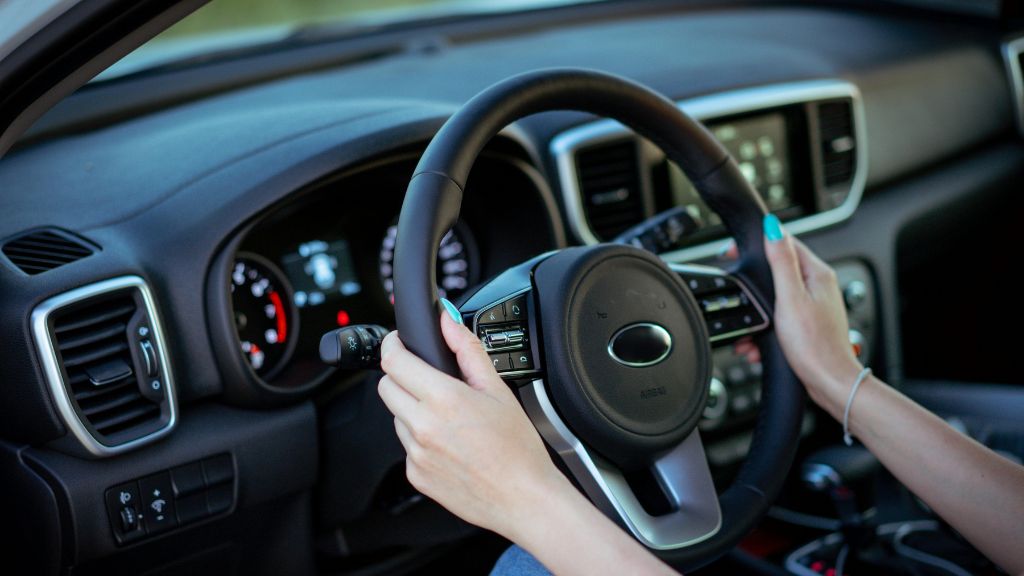
| Identify WHERE the vibration comes from FIRST – then read that section. Steering wheel vibration, seat/floor vibration, and brake pedal vibration each have completely different causes and costs. Getting this wrong wastes money on the wrong fix. |
Car vibration is the problem Indian drivers ignore longest – ‘it is just a small shake, nothing major.’ But the reality is that vibration is your car communicating a problem. Unbalanced wheels at highway speed can cause tyre blowouts. Warped brake discs mean your emergency stop is compromised. Worn CV joints can fail suddenly while driving.
The good news: most Indian car vibration problems are inexpensive to fix if diagnosed correctly. Wheel balancing costs Rs. 200–320 for all four wheels and fixes 50–60% of vibration complaints. The expensive fixes only become necessary when the basic diagnosis is skipped and problems are left unaddressed for months.
Step 1 – Identify Where and When the Vibration Occurs
| Where is the vibration? | When does it happen? | Most Likely Cause | Priority |
| Steering wheel | 60–100 km/h on highway | Wheel balance | Medium – fix soon |
| Steering wheel | When braking only | Warped brake disc | HIGH – safety issue |
| Steering wheel | During acceleration | CV joint wear | HIGH – fix urgently |
| Seat or floor (not steering) | Constant, worse at idle | Engine/gearbox mount | Medium |
| Whole car | Specific speed band (e.g. 65–75 km/h only) | Wheel balance/tyre | Medium – fix soon |
| Brake pedal | When pressing brake | Warped brake disc | HIGH – fix urgently |
| Engine area | On startup, eases when warm | Spark plug or engine mount | Medium |
Use this table to identify your most likely cause, then go directly to that section below for the full explanation and cost breakdown.
Cause 1 – Wheel Imbalance – Fix This First Before Anything Else
Every wheel and tyre assembly has small weight variations. Wheel balancing adds tiny counterweights to cancel these out. When the balance is off – due to a pothole impact, a fallen counterweight, or gradual wear – the wheel develops a wobble that transmits directly to the steering wheel, especially between 60 and 100 km/h.
Symptoms: Steering wheel vibrates at specific speeds, typically 60–100 km/h. The vibration is most intense at one particular speed and lessens if you slow down or speed up beyond it. Tyres show uneven wear patterns.
Self-check: Inspect each wheel rim. You will see small rectangular lead weights clipped to the rim edge. If any are missing (you will see a clean spot where one fell off) – that wheel is definitely unbalanced.
Fix: Wheel balancing on all four wheels. Available at any tyre shop, petrol pump with service bay, or service centre.
Cost 2026: Rs. 40–80 per wheel | All 4 wheels: Rs. 200–320 | Do this first – it fixes 50–60% of vibration complaints in India
Cause 2 – Wrong Tyre Pressure
Over-inflated and under-inflated tyres both cause ride harshness and vibration. In India’s heat, tyre pressure rises naturally during the day as the air inside heats up – a tyre correctly inflated in the morning is 3–5 PSI over-inflated by afternoon.
Correct pressure: Check the sticker on your driver’s door jamb or inside the fuel filler flap. Most Indian cars: front 30–32 PSI, rear 28–32 PSI. Check when tyres are cold (car not driven for 2+ hours).
Cost: Free – petrol pump air filling is free across India. A tyre pressure gauge for home use: Rs. 100–200.
Cause 3 – Tyre Wear (Uneven or Cupped)
Tyres that have worn unevenly — more on one edge than the other, or with flat spots – create vibration that no amount of balancing or alignment can fix. The irregular surface itself is causing the shake. This is common on Indian roads where potholes cause impact flat-spotting and misalignment causes edge wear.
Self-check: Run your hand across the tyre tread in both directions. If you feel ridges, scalloping (wavy wear), or one edge significantly lower than the other – the tyre needs replacement.
Cost: New tyre: Rs. 2,500–6,000 per tyre depending on size and brand. Always balance newly fitted tyres.
Cause 4 – Wheel Alignment Issue
Wheel alignment refers to the precise angles at which the tyres contact the road. A single pothole or kerb strike can knock alignment out of specification. Misaligned wheels cause the car to pull to one side, increase tyre wear on one edge, and create steering vibration on longer drives.
Symptoms: Car pulls to the left or right when you release the steering wheel on a flat road. Steering feels slightly off-centre. Tyres wearing faster on one inner or outer edge.
Fix: Four-wheel computerised alignment at any reputable tyre shop or service centre.
Cost 2026: Rs. 400–800 for a full four-wheel alignment
Cause 5 – Warped Brake Disc – Safety Issue, Fix Urgently
Brake discs warp (develop an uneven surface) when they overheat and cool unevenly. Riding the brakes on a long downhill, washing hot discs with cold water, or worn brake pads that allow metal-to-metal contact can all cause warping. A warped disc creates a pulsing sensation through the brake pedal and sometimes the steering wheel every time you brake.
Symptoms: Steering wheel or brake pedal pulsates or vibrates when braking. Vibration is absent during normal driving but appears immediately when you press the brake. The pulsing frequency corresponds to wheel rotation speed.
Why this is serious: A warped disc means uneven braking force — one side of the disc grips harder than the other with each rotation. In an emergency stop, this can cause the car to pull unpredictably. Fix this immediately.
Fix: Disc resurfacing (if wear is minor): Rs. 500–1,000 per disc. Disc replacement (if worn too thin for resurfacing): Rs. 1,500–4,000 per disc.
Cause 6 – CV Joint Wear – Fix Before It Fails Completely
CV (Constant Velocity) joints transfer engine power to the front wheels while allowing the suspension and steering to move. When a CV joint wears out, it develops play that creates vibration during acceleration — especially noticeable when pulling away from a stop or accelerating through a corner.
Symptoms: Vibration specifically during acceleration, not at constant speed. A clicking or clunking sound when turning at low speed with the steering on full lock. Both symptoms together are classic CV joint failure.
Why urgent: A failed CV joint can break completely while driving, causing sudden loss of drive to that wheel. On a busy road at speed, this is dangerous.
Fix: CV boot replacement (if only the rubber boot is torn and grease has not been lost for long): Rs. 800–1,500. Full CV joint replacement: Rs. 2,500–6,000.
Cause 7 – Worn Engine or Gearbox Mounts
The engine and gearbox sit on rubber mounts that absorb the natural vibration of the engine before it reaches the cabin. After 80,000–1,20,000 km, these rubber mounts deteriorate and harden, transmitting much more engine vibration to the car body and seats.
Symptoms: Noticeable vibration when engine is idling (at traffic lights). Vibration through the gearknob when changing gears. A ‘clunk’ sensation when engaging drive from park. Excessive engine movement visible in the bonnet when someone revs while you watch from outside.
Self-check: Open bonnet and have someone rev the engine briefly while you watch. Normal engine movement is minimal — less than an inch. If the engine rocks visibly, mounts are worn.
Cost 2026: Per mount: Rs. 600–2,500 | Full set (3–4 mounts): Rs. 3,000–8,000 including labour
Cause 8 – Misfiring Engine (Spark Plug or Injector)
When one or more cylinders do not fire properly – due to worn spark plugs in petrol cars or injector issues in diesel – the engine delivers uneven power pulses that cause vibration, especially at idle. The vibration typically reduces at higher revs when momentum smooths out the unevenness.
Symptoms: Rough idle with vibration through the seat and steering. Engine feels ‘lumpy’ at low RPM. Check engine light may be illuminated on newer cars. Fuel consumption has increased.
Fix: Spark plug set replacement for petrol cars: Rs. 500–2,000 for a full set. Injector cleaning service: Rs. 1,500–3,000.
Diagnosis Summary Chart
| Your Symptom | Most Likely Cause | Est. Cost | Urgency |
| Steering shakes between 60–100 km/h | Wheel imbalance | Rs. 200–320 | Medium |
| Brake pedal pulsates when braking | Warped brake disc | Rs. 1,000–8,000 | HIGH |
| Vibration during acceleration + click on turns | CV joint wear | Rs. 2,500–6,000 | HIGH |
| Rough idle, shaking at traffic lights | Engine mount or spark plugs | Rs. 500–8,000 | Medium |
| Car pulls to one side, edge tyre wear | Wheel alignment | Rs. 400–800 | Medium |
| Highway vibration, smooth in city | Tyre wear/imbalance | Rs. 200–6,000 | Medium |
| PRO TIP: Always do wheel balancing AND alignment first (Rs. 600–1,100 combined). This single step fixes over 50% of vibration complaints in India. Only investigate suspension, brakes, or drivetrain components if the vibration persists after fresh balancing and alignment. Starting with the expensive checks wastes money when the answer is often Rs. 200 away. |
Frequently Asked Questions

Q: Car vibrates at 80 km/h but is smooth below 60 – what is the cause?
This speed-specific vibration pattern is the classic signature of wheel imbalance. The vibration intensity peaks at a specific speed and reduces above and below it. Get all four wheels balanced immediately – it costs Rs. 200–320 and resolves this in 95% of cases. If vibration persists after fresh balancing, the tyre itself may have developed an irregular wear pattern and needs replacement.
Q: How often should wheel balancing be done in India?
Every 10,000–15,000 km as a regular maintenance item, or immediately after hitting a significant pothole. Also do wheel balancing every time a new tyre is fitted. Given India’s road conditions, every 8,000–10,000 km is a more practical interval. It costs Rs. 200–320 for all four wheels and takes 30 minutes – one of the best value maintenance jobs available.
Q: My car vibrates when I brake – is it dangerous to continue driving?
Yes – brake vibration from a warped disc is a genuine safety concern and should be addressed promptly. While the car remains technically driveable, the uneven braking force means the car can pull sideways during emergency stops. Do not delay this repair. Disc resurfacing or replacement is not an optional maintenance item – it is a safety requirement.
Q: New car is also vibrating – is this normal?
A new car should not vibrate at any speed on reasonably smooth road. If a new car vibrates: check tyre pressures first (they are often set incorrectly at the dealership for transport), then have the dealer balance all four wheels (any quality dealer does this free within the first service). If vibration persists after these steps, raise it with the dealership as a warranty concern immediately – do not allow a new car defect to go unaddressed.