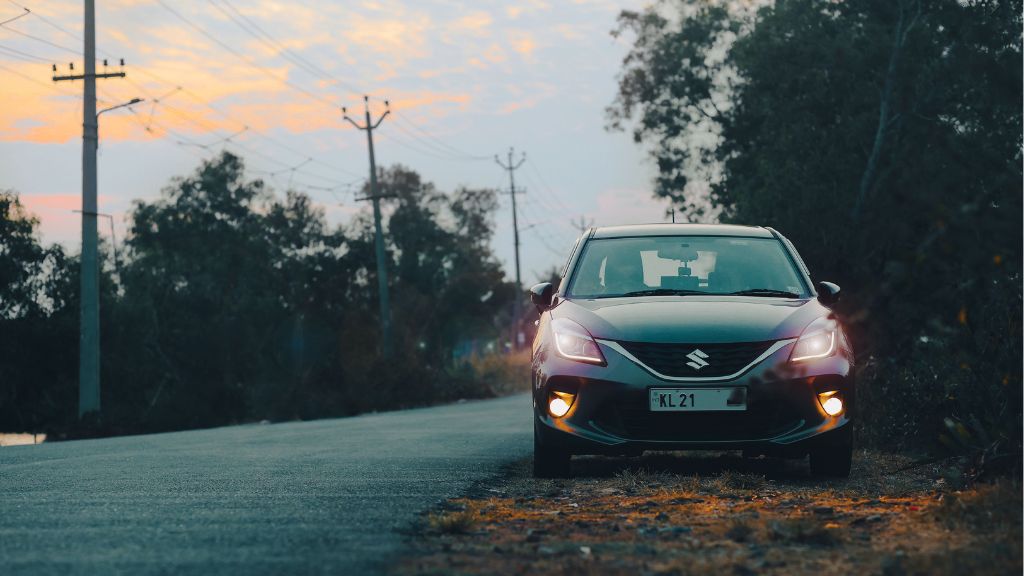
For the first time in India’s automotive history, a car rolling off an Indian production line can run on fuel ranging from regular petrol to 100% pure ethanol – no modifications, no compromise, no trade-off. On June 4, 2026, the day before World Environment Day, Maruti Suzuki India unveiled exactly that vehicle at an event in Delhi. The launch marks the culmination of years of government policy pushing for reduced crude oil dependence and the beginning of what could be India’s next major alternative fuel revolution.
The flex-fuel vehicle (FFV) concept is not new globally – Brazil has used flex-fuel cars as the dominant vehicle type for decades. But in India, where ethanol availability above E20 remains limited, this launch is a declaration of intent: the technology is ready, the mandate is clear, and the infrastructure will follow. Here is everything you need to know.
What Exactly Did Maruti Launch on June 4?
Maruti Suzuki confirmed the showcase of flex-fuel production-specification vehicles based on two existing models:
Maruti WagonR Flex-Fuel: Based on the current WagonR, the FFV version uses Maruti’s 1.2-litre Z-series petrol engine heavily modified for ethanol compatibility. The engine can run on any blend from E0 (pure petrol) to E100 (pure ethanol) – the vehicle’s onboard sensors detect the blend automatically and adjust fuel injection, ignition timing, and engine parameters accordingly.
Maruti Fronx Flex-Fuel: Based on the Fronx’s 1.2-litre Z12E naturally aspirated engine, this is an upgraded version of the E85-compatible prototype shown at Japan Mobility Show 2025. The India-spec model has been engineered to handle E100 – a more advanced setup than the E85 version shown internationally.
What Changes in a Flex-Fuel Engine?
Running on high-ethanol blends requires significant engine modifications. These are not cosmetic changes – they are fundamental engineering upgrades:
- Heated fuel rail: Ethanol has a higher viscosity than petrol and requires heating at cold start for proper atomisation
- Stainless steel fuel injectors: Ethanol is more corrosive than petrol; standard injectors degrade quickly on E85+
- Recalibrated Engine Control Unit (ECU): Fuel injection maps, ignition timing, idle speed all adjusted for ethanol’s different combustion characteristics
- Upgraded fuel pump: Ethanol requires higher flow rates than petrol for the same power output
- Ethanol content sensor: Detects the exact ethanol percentage in the fuel tank and communicates to ECU in real time
- Ethanol-resistant seals and gaskets: Regular rubber components degrade rapidly with high ethanol blends
- Modified fuel tank: Ethanol absorbs moisture – the tank material and coating must resist this
These changes add approximately Rs 8,000–15,000 to the manufacturing cost of the base vehicle – a relatively small premium for the fuel flexibility gained.
Ethanol vs Petrol – What Flex-Fuel Means for Running Costs
The economic case for flex-fuel depends entirely on the price of ethanol versus petrol in India. Current situation in June 2026:
| Fuel | Price (approx) | Energy Content | Effective Cost/km* | Availability |
| Petrol (E20) | Rs 94–107/litre | Full energy | Rs 1.80–2.40 | Everywhere |
| E85 (85% Ethanol) | Rs 65–70/litre (estimated) | ~75% of petrol | Rs 1.50–1.80 | Very limited |
| E100 (Pure Ethanol) | Rs 55–62/litre (estimated) | ~70% of petrol | Rs 1.40–1.60 | Not yet retail |
The critical caveat: ethanol has approximately 30% lower energy content per litre than petrol. A car doing 18 km/l on petrol will do approximately 12–13 km/l on pure ethanol. This means the per-kilometre cost advantage of ethanol depends on it being priced at least 30% cheaper than petrol. At Rs 55–62 per litre for E100 versus Rs 95–105 for petrol, the economics are positive – but only when ethanol is priced at that discount, which is not yet guaranteed at retail scale in India.
The Ethanol Infrastructure Problem – India’s Biggest Flex-Fuel Challenge
The flex-fuel car technology is proven and ready. The barrier to mass adoption is fuel availability. Currently in India:
- E20 (20% ethanol blend) is the standard across India – all petrol sold is E20
- E85 fuel is available at approximately 1,200 pilot pumps in select states including UP, Bihar, and Maharashtra
- E100 (pure ethanol) fuel is not yet available at any retail fuel station in India
Maruti’s own executive Rahul Bharti acknowledged at the company’s earnings call that ‘volumes will be initially limited’ and that meaningful scale is ‘5 to 10 years from now.’ The government is evaluating raising mandatory blending from E20 to E25, E27, and eventually higher. Oil companies are being directed to install E85 dispensers at high-volume fuel stations. But the infrastructure rollout will take years.
This creates an interesting ownership scenario for early buyers: you own a car that CAN run on ethanol but may need to run on petrol for most of its early life simply because the fuel is not available. It is like buying a CNG car in a city without CNG stations.
Benefits of Flex-Fuel for India – The Government’s Vision
The government’s push for flex-fuel vehicles is driven by three interconnected priorities:
Energy Security: India imports approximately 85% of its crude oil at a cost of $120+ billion annually. Every litre of ethanol displacing a litre of imported petrol directly improves the trade balance and reduces foreign exchange outflow.
Farmer Income: India is the world’s second-largest producer of sugarcane. Ethanol is primarily produced from sugarcane molasses and surplus grains. Scaling ethanol demand creates a direct income channel for India’s agricultural sector.
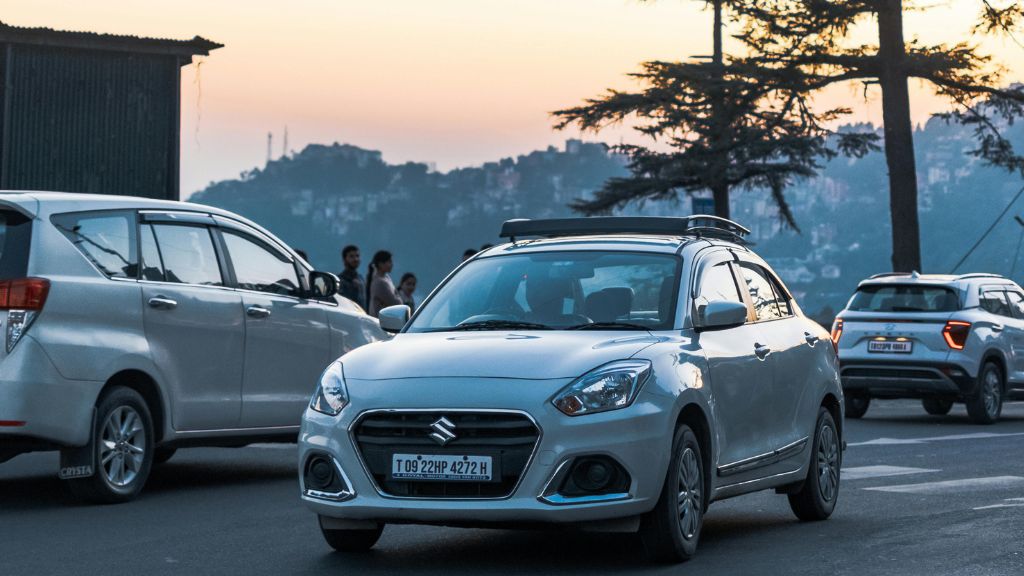
Emission Reduction: Ethanol combustion produces approximately 50-70% less CO2 on a lifecycle basis than petrol. India’s commitment to net-zero by 2070 requires aggressive decarbonisation of transport – flex-fuel + ethanol is one of the fastest-deployable tools.
Maruti Flex-Fuel Car vs CNG Car vs Electric – Which Makes More Sense?
| Flex-Fuel (FFV) | CNG Car | Electric Car | |
| Running cost/km | Rs 1.40–2.40 (depends on fuel) | Rs 0.70–1.10 | Rs 0.12–0.22 |
| Fuel availability | Petrol everywhere, ethanol limited | Good in metros/cities | Charging improving |
| Range per fill | 500–700 km on petrol | 250–350 km on CNG | 200–400 km on charge |
| Purchase premium | Rs 8,000–15,000 over petrol | Rs 40,000-70,000 | Rs 2–8 lakh |
| Future potential | High (if ethanol scales) | Stable | Highest |
| Best suited for | Patient adopters + rural users | City commuters | Urban + home charging |
For the average Indian buyer today, the flex-fuel car offers future optionality – if ethanol infrastructure grows, your car becomes dramatically cheaper to run. If it doesn’t, you simply run on petrol and are no worse off than a standard petrol car. The purchase premium of Rs 8,000–15,000 is negligible. The downside risk is essentially zero.
Expected Price of Maruti WagonR and Fronx Flex-Fuel
Maruti WagonR FFV: Expected Rs 5.50–7.50 lakh (same as standard WagonR + Rs 8,000–12,000 FFV premium)
Maruti Fronx FFV: Expected Rs 7.50–10.50 lakh (same as standard Fronx + Rs 10,000–15,000 FFV premium)
The minimal price premium makes the FFV variant a logical choice for buyers in the WagonR and Fronx target segments – you get a standard petrol car that also has the option to run cheaper when ethanol becomes widely available. There is no practical reason to choose the standard petrol version over the FFV if prices are as expected.
When Will Flex-Fuel Cars Be Available to Buy?
The June 4 event was a showcase, not a consumer sales launch. Maruti has confirmed the technology and production intent. Commercial sales launch is expected by Q3-Q4 2026, subject to E85/E100 fuel becoming available at retail pumps in a sufficient number of locations.
The government’s timeline: Ministry of Petroleum has directed oil marketing companies to install E85 dispensers at 500+ high-volume fuel stations by December 2026 as the first phase. Full E85 availability across India is targeted by 2028. E100 at retail is a longer journey – current timeline suggests 2029–2031 for meaningful availability.
Frequently Asked Questions – Maruti Flex Fuel India 2026
Q: What is the Maruti Suzuki flex-fuel car launched on June 4, 2026?
Maruti Suzuki showcased production-specification flex-fuel vehicles based on the WagonR and Fronx at an event in Delhi on June 4, 2026. These vehicles can run on any fuel blend from E0 (pure petrol) to E100 (100% ethanol) – India’s first such production cars. The event was attended by Union Ministers Nitin Gadkari and Hardeep Singh Puri.
Q: What is a flex-fuel car and how does it work?
A flex-fuel vehicle (FFV) has an engine modified to run on any mixture of petrol and ethanol, from pure petrol (E0) to pure ethanol (E100) or any blend in between. An onboard ethanol content sensor detects the blend automatically and the engine control unit adjusts fuel injection and ignition settings in real time to optimise performance and efficiency for whatever fuel is in the tank.
Q: Is ethanol available in India for flex-fuel cars?
Currently, India’s retail fuel network supplies E20 (20% ethanol blend) as the standard petrol across the country. E85 is available at approximately 1,200 pilot pumps in select states. E100 (pure ethanol) is not yet available at any retail pump. The government is targeting E85 availability at 500+ major stations by December 2026 as the first phase of rollout.
Q: Will a flex-fuel car save money in India?
Running cost savings depend on ethanol price relative to petrol. If E100 is available at Rs 55–62 per litre versus petrol at Rs 95–105 per litre, the per-kilometre cost difference is positive despite ethanol’s lower energy content. On E20 (current standard), there is no meaningful saving – it is the same as a regular petrol car. The savings materialise when E85 or E100 becomes widely available at the expected price points.
Q: Can I use a flex-fuel car as a normal petrol car?
Yes, completely. A flex-fuel car runs perfectly on regular E20 petrol available everywhere in India. You are not required to use ethanol fuel. The FFV capability is additive – you gain the option to use ethanol if it is available and economical, while retaining full compatibility with regular petrol when it is not. There is no performance or efficiency penalty when running on regular petrol.