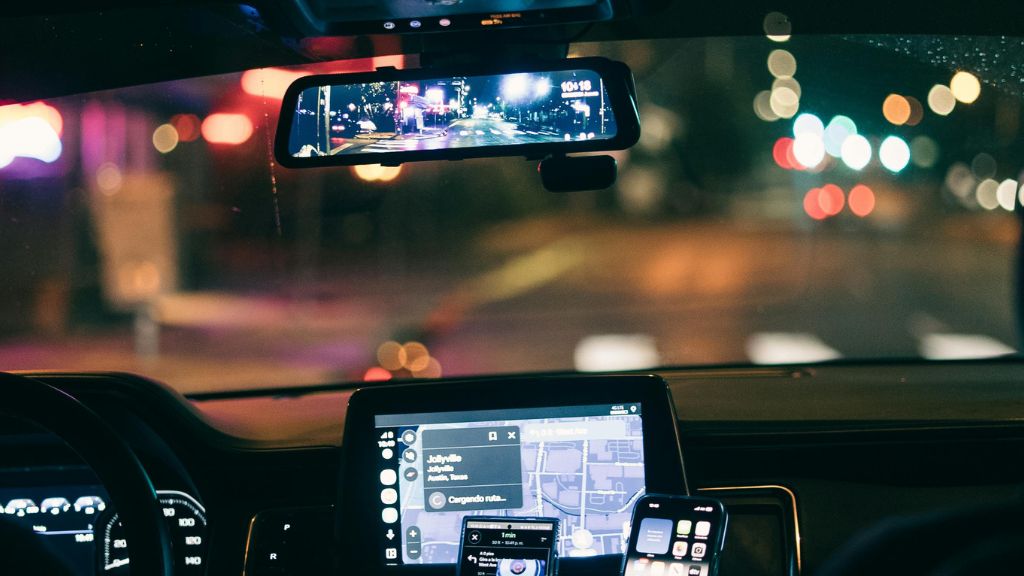
Last March, a white Fortuner ran a red light and hit my colleague’s car at a signalled intersection in Hyderabad. The other driver immediately claimed my colleague had run the signal. My colleague had a dashcam. The footage – timestamped, GPS-tagged – showed exactly who ran the red light. The insurance claim settled in his favour in 11 days. The dashcam cost Rs 5,500. The claim settled at Rs 85,000. This is why every driver in India needs one.
What to Look For in a Dashcam for Indian Roads
- Resolution (high priority): Minimum 1080p Full HD; 2K for clear number plate capture at highway speeds
- Low-light performance (high priority): Indian roads have extreme lighting variation – essential feature
- Heat resistance (high priority): Indian dashboards reach 70–80°C in summer – choose capacitor-based cameras
- Wide angle lens (medium): 120–140 degrees ideal; above 160 degrees causes excessive edge distortion
- GPS logging (medium): Timestamps location on footage – valuable for insurance disputes
- Parking mode (medium): Records when parked – requires hardwire kit
- Loop recording (essential): Automatically overwrites oldest footage – without this recording stops when card fills
Top 8 Dashcams for Indian Cars 2026
| Rank | Model | Resolution | Low Light | Price | Best For |
| #1 | Viofo A229 Plus 3CH | 2K front+2K rear+cabin | Excellent | Rs 14,500 | Best overall 3-channel |
| #2 | 70mai A810 | 4K front+1080p rear | Excellent | Rs 13,000 | Best 4K front camera |
| #3 | Viofo A119 Mini 2 | 2K front only | Very Good | Rs 6,500 | Best single-front value |
| #4 | 70mai M500 | 1080p HDR | Very Good | Rs 5,500 | Best under Rs 6,000 |
| #5 | Nextbase 622GW | 4K front | Excellent | Rs 22,000 | Best premium single |
| #6 | Qubo Car Dash Cam Pro | 2K front+1080p rear | Good | Rs 7,999 | Best Indian brand |
| #7 | Garmin Dash Cam Mini 3 | 1080p front only | Good | Rs 9,500 | Best for minimalists |
| #8 | Mio MiVue J756DSA | 2K front+1080p rear | Good | Rs 8,999 | Best Sony sensor value |
Top Pick: Viofo A229 Plus 3-Channel
The Viofo A229 Plus earns the top spot for serious Indian dashcam users. Three channels capture front, rear, and cabin simultaneously. The Sony Starvis 2 sensor delivers night footage quality most cameras at twice the price cannot match. Capacitor-based (no battery) – suitable for Indian summer dashboard temperatures. Built-in GPS with speed overlay. The cabin channel is increasingly relevant as disputes involving passengers and ride-sharing grow.
Budget Pick Under Rs 6,000: 70mai M500
The 70mai M500 is the most compelling entry-level choice for Indian conditions. Its HDR mode handles the dramatic exposure difference between bright Indian sunlight and shadowed underpasses remarkably well. Footage quality clearly identifies number plates in good light. Main limitation: front-only, no rear coverage.
Front-Only vs Front+Rear – Which Setup?
| Setup | Good For | Limitation | Price Range |
| Front only | Documenting your driving, frontal incident proof | No rear-end collision evidence | Rs 3,000–10,000 |
| Front + Rear | Most comprehensive everyday protection | Wiring rear requires more installation effort | Rs 6,000–18,000 |
| 3-Channel (front+rear+cabin) | Ride-sharing, taxi, fleet, maximum coverage | Higher cost, complex install | Rs 12,000–25,000 |
| Front + Parking mode | High-theft areas, tight parking situations | Requires hardwire kit | Rs 5,000–15,000 |
Memory Card – The Most Overlooked Component
A dashcam is only as reliable as its memory card. Regular consumer cards fail prematurely because dashcams write continuously – thousands of write cycles per year. Use only dashcam-rated endurance cards:
- Samsung PRO Endurance (Rs 800–1,500): rated 140,000 hours – industry standard recommendation
- Kingston Canvas Go Plus (Rs 600–900): good endurance at lower price
- SanDisk High Endurance (Rs 700–1,200): reliable, widely available, good heat tolerance
Minimum size: 32GB for 1080p (3-4 hours of footage before loop). For 2K/4K or parking mode: 64GB or 128GB.
Clean Installation Tips
- Mount at inner rear-view mirror housing – centre position, not corner
- Route power cable along A-pillar trim, across headliner, down other A-pillar – completely hidden
- Use ignition-switched USB port (if available) for automatic on/off with ignition
- For parking mode: use a hardwire kit with fuse tap and low-voltage cutoff to protect car battery
- Format memory card using the dashcam’s own format function – not via computer
Frequently Asked Questions (FAQ)
Q: Is dashcam footage admissible in Indian courts?
A: Yes. Dashcam video has been accepted in Indian traffic courts, civil courts for accident liability, and insurance disputes. Footage must be timestamped and the camera’s system clock accurately set. GPS-tagged footage carries even greater credibility.
Q: Will a dashcam drain my car battery?
A: In normal use (recording only when engine is on), a dashcam draws 200–400 mA – negligible. In parking mode with a quality hardwire kit that includes a low-voltage cutoff (disconnects at 11.8–12V), your starting battery is protected.
Q: Do dashcams work in extreme Indian summer heat?
A: Capacitor-based dashcams (Viofo, most 70mai models) are significantly more heat-tolerant than battery-based cameras. In Indian summer where dashboards reach 70–80°C, capacitor cameras are the correct choice. Battery-based dashcams typically swell and fail within 1–2 summers.