Ford has issued an urgent recall for nearly 43,000 Mustang Mach-E electric vehicles due to a faulty differential unit that can fracture unexpectedly — causing a sudden and complete loss of drive power while the vehicle is in motion. Here is the complete story, what it means for Mach-E owners, and what Ford is doing to fix it.
The Recall at a Glance
Ford Motor Company has filed an official recall with the National Highway Traffic Safety Administration (NHTSA) covering 42,900 Mustang Mach-E electric vehicles. The defect: a faulty differential unit that may fracture under operating stress, causing an immediate and total loss of drive power. Unlike an internal combustion engine that typically sputters and slows gradually when failing, a fractured EV differential can result in an abrupt, instantaneous loss of drive — with the vehicle going from full power to zero drive in an instant, creating a serious road safety risk.
Ford has confirmed the recall affects vehicles across multiple model years and configurations. Owner notification letters are being prepared, with mailing expected to begin within the next 30 days. The fix will be performed by Ford dealerships free of charge.
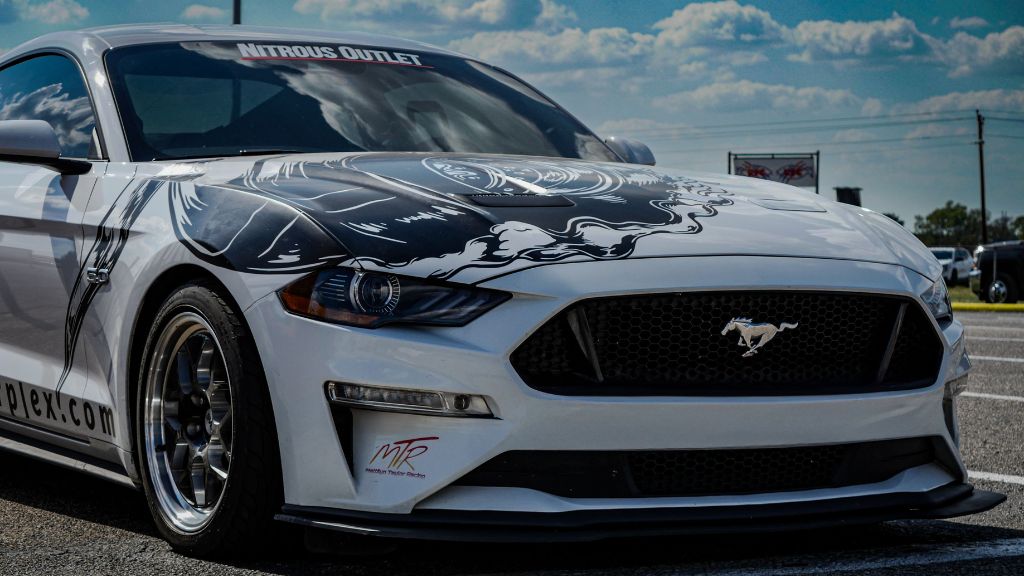
Which Mustang Mach-E Vehicles Are Recalled
Confirmed Affected Model Years
- 2021 Ford Mustang Mach-E — all variants (Select, Premium, California Route 1, GT, GT Performance Edition)
- 2022 Ford Mustang Mach-E — all variants
- 2023 Ford Mustang Mach-E — select build dates, confirmed by NHTSA documentation
Not all 2023 and later model year Mach-Es are confirmed to be affected — some received the updated differential design in mid-production. Check your VIN at nhtsa.gov/recalls for the definitive confirmation for your specific vehicle.
Affected Battery and Drive Configurations
- Standard Range (SR) with Rear-Wheel Drive — CONFIRMED affected
- Extended Range (ER) with Rear-Wheel Drive — CONFIRMED affected
- Standard Range (SR) with All-Wheel Drive — CONFIRMED affected
- Extended Range (ER) with All-Wheel Drive (GT and GT Performance) — CONFIRMED affected
The differential fault appears across both rear-drive and all-wheel-drive variants. The issue is within the rear differential unit specifically — in AWD vehicles, only the rear differential is affected, but loss of the rear differential in an AWD Mach-E still means a significant loss of drive capability.
What Is a Differential and Why Does It Matter in an EV?
Many readers may be more familiar with how differentials work in traditional petrol or diesel cars, where they are critical components connecting the gearbox to the driven wheels. In an electric vehicle like the Mustang Mach-E, the differential serves a similar purpose but works differently.
In the Mach-E’s rear-drive and AWD configurations, the rear electric motor’s power output passes through the rear differential before reaching the rear wheels. The differential allows the left and right rear wheels to spin at different speeds during cornering — without this, the inside wheel would drag and the car would handle poorly. The differential in the Mach-E is integrated directly with the motor assembly rather than being a separate unit connected by a driveshaft.
The fault identified by Ford: under certain operating conditions — specifically during high-torque acceleration events, which are common in EV driving thanks to the Mach-E’s instant torque delivery — internal components within the differential can experience stress fractures. When a fracture occurs, drive transmission is immediately and completely severed. The motor continues to run electrically, but no torque reaches the wheels.
The danger: a sudden loss of drive power at highway speeds, during a merge onto a motorway, or during a fast-moving urban intersection crossing can be extremely dangerous. Other road users may not have time to react to a Mach-E that suddenly stops accelerating mid-manoeuvre.
How Common Is This Failure? What Ford’s Data Shows
Ford has not publicly disclosed how many field failures — actual fractures — have occurred before the recall was issued. However, NHTSA’s records confirm that a pattern of complaints about sudden drive loss in the Mustang Mach-E triggered an investigation, and Ford’s own warranty data showed a statistical anomaly in differential-related failures in the 2021 and 2022 model years.
Engineering analysis identified the fracture mode during internal testing, at which point Ford escalated the issue to a formal recall under NHTSA’s Early Warning Reporting requirements. The decision to recall rather than issue a Technical Service Bulletin (which would only apply to vehicles coming in for service) indicates Ford considers the risk serious enough to proactively contact all affected owners.
💡 If you have already experienced a sudden loss of drive power in your Mach-E and had it repaired at a dealer, keep all your service records. If the repair was performed at your expense rather than under warranty, you may be entitled to reimbursement once the recall repair procedure is officially established.
Ford’s 2026 Recall Count — A Year of Unprecedented Scale
The Mustang Mach-E recall is the latest in a remarkable year of recall activity for Ford Motor Company. As of July 8, 2026, Ford has already surpassed 10 million recalled vehicles in the calendar year 2026 — a staggering figure that reflects both the scale of Ford’s production and a series of significant quality issues across multiple product lines.
Notable Ford recalls in 2026 include: a park system defect affecting 741,000 SUVs and trucks (vehicles could roll away after the driver believed the park function was engaged), a brake line corrosion issue in older F-150 trucks in northern states, and now the Mach-E differential recall. These issues span both electric and traditional internal combustion vehicles, suggesting quality control challenges that are not limited to any single platform or technology.
For context: 10 million recalled vehicles does not mean 10 million defective vehicles — recalls range from minor software fixes to serious safety defects. But the volume indicates a quality management challenge that Ford’s leadership has publicly acknowledged and committed to addressing through improved manufacturing processes and more rigorous pre-production testing.
What Ford Is Doing — The Fix and Timeline
The Repair Procedure
Ford engineers have developed a replacement differential unit that addresses the fracture-prone design. The repair involves removing the existing rear differential assembly and installing a redesigned unit with improved metallurgy and modified internal geometry to prevent the stress fracture pattern.
Estimated dealership repair time: 4–6 hours including fluid work, torque specifications, and test drive verification. Dealers will perform a test drive after installation to confirm full drive function before returning the vehicle to the owner.
Parts Availability and Timing
Ford has begun manufacturing the replacement differential units. Dealerships are expected to start receiving parts inventory by late July 2026. Given that approximately 43,000 vehicles are affected, parts supply should be adequate — this recall does not have the same scale challenge as the Jeep recall covering over one million vehicles.
Cost to Owner
The recall repair is completely free of charge. If your dealership attempts to charge you for any labor, parts, or diagnostic fees related to this specific recall repair, refuse and contact Ford Customer Service at 1-800-392-3673. All recall repairs are legally required to be performed at no cost to the consumer.
Is the Mustang Mach-E Still Worth Buying in 2026?
This is a fair question that many prospective Mach-E buyers are asking in the wake of the recall. Here is the honest answer.
The Mustang Mach-E remains one of the most compelling electric SUVs in its price range in the American market. Its 312-mile range on the extended battery, spacious interior, strong performance especially in GT spec, and practical SUV form factor make it a genuinely attractive proposition for families considering an EV transition.
Recalls, however significant they sound, are a normal part of the automotive industry — both electric and petrol vehicles are subject to them regularly. What matters is how the manufacturer responds. Ford has acted proactively here, issuing a recall before widespread consumer reports of failures forced their hand. The differential fix, once applied, should resolve the issue permanently.
For buyers currently cross-shopping the Mach-E against rivals like the Tesla Model Y, Hyundai Ioniq 5, and Chevrolet Equinox EV: the recall is a known quantity that will be fixed, whereas all vehicles carry some level of unknown risk. The more relevant considerations are total cost of ownership, charging network access, interior quality, and long-term reliability data.
💡 If you are about to purchase a Mach-E, ask the dealer for proof that the recall repair has been completed before you take delivery. This applies to both new vehicles from inventory and used Mach-E purchases. An unrepaired recall on a vehicle you’re purchasing is not acceptable.
Steps for Current Mach-E Owners — Right Now
- CHECK YOUR VIN: Visit nhtsa.gov/recalls and enter your 17-character VIN to confirm if your vehicle is included.
- CALL YOUR FORD DEALER: Schedule a recall repair appointment. Ask specifically about the differential recall and the parts availability timeline.
- AVOID HIGH-TORQUE ACCELERATION: While awaiting repair, drive conservatively. Avoid full-throttle acceleration, aggressive launch control use, or situations requiring maximum torque output. This reduces the stress on the differential.
- DOCUMENT ANY SYMPTOMS: If your Mach-E has ever shown a sudden power loss, dashboard warning lights related to the drivetrain, or unusual vibration from the rear axle, note the date, mileage, and conditions. This documentation may be relevant to warranty claims or reimbursement.
- CONTACT FORD DIRECTLY: If your dealer cannot schedule you within a reasonable timeframe, escalate to Ford Customer Relationship Centre at 1-800-392-3673. They can apply pressure to dealer scheduling in urgent recall situations.