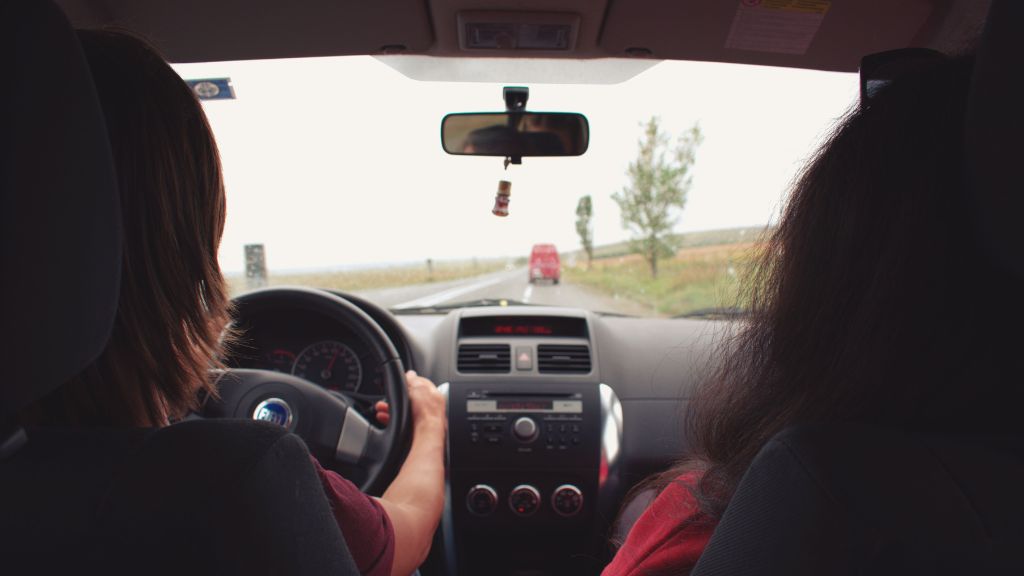
| If you have only driven in Indian cities, the first time you take a car onto a national highway can be genuinely disorienting. The rules are different. The risks are different. The required skills are different. This guide is not a list of official traffic rules – it is an honest account of what you will actually encounter, and how to handle it. |
I drove my first proper highway stretch – Delhi to Jaipur – about a year after getting my licence. I had been confidently navigating city traffic for that entire year and had developed what I now recognise as entirely misplaced confidence. City driving in India teaches you certain things: patience, anticipation, the ability to judge gaps that look impossibly small, the art of merging without eye contact. What it does not prepare you for is the particular flavour of chaos on Indian national highways.
The Delhi-Jaipur NH48 is one of the better highways in India. Six lanes, well-marked, with service roads and decent rest stop infrastructure. If I had started with a two-lane state highway, I might have turned around. Even on NH48, the first two hours were genuinely stressful – not because I was doing anything wrong, but because I was operating by city driving rules on a road that has its own entirely different logic.
Here is what that logic is, how to understand it, and what to do when things go sideways.
The Speed Situation – What the Signs Say vs What Actually Happens
The speed limit on most Indian expressways is 120 km/h for cars. On four-lane national highways, it is 100 km/h. These are legal limits. They are also, frankly, somewhat theoretical in practice.
On NH48 between Delhi and Jaipur, the actual traffic flow runs between 80 and 130 km/h depending on the stretch, the time of day, and how much truck traffic is present. During the day, most private cars travel at 90 to 110 km/h. At night, some drivers push well above the limit. The trucks, which are nominally limited to 80 km/h, often run slower due to their load.
Where this creates genuine danger is not in the speed itself but in the speed differential. A truck doing 55 km/h in the left lane and a car approaching at 110 km/h creates a closing speed that demands early observation and early action. The first habit Indian highway driving demands is looking further ahead than city driving requires – not 50 metres, but 300 to 500 metres ahead. Slow-moving vehicles appear in your lane without much warning on Indian roads, particularly after curves, underpasses, and on stretches where the road surface deteriorates.
Overtaking – The Single Most Dangerous Thing on Indian Highways
More fatal accidents on Indian highways involve overtaking than any other single manoeuvre. This is not surprising once you have driven these roads – the combination of impatience, speed differentials, inadequate mirrors on some vehicles, and a cultural tendency to use the road as a three-lane space regardless of markings creates the conditions for overtaking accidents constantly.
The specific mistake I see most often – and came close to making myself in those early highway drives – is initiating an overtake without adequately checking what is coming from behind in the overtaking lane. In city driving, you look in the mirror, see the gap, and move. On a highway at 100 km/h, a car approaching from 400 metres behind at 120 km/h will be on you in under 7 seconds. If you are mid-overtake of a slow truck when that car arrives, the geometry is not favourable.
The standard I now follow: before any overtake, I check the mirror for a clear gap of at least 400 metres, signal for a minimum of 3 seconds before moving, and complete the overtake at a pace that gets me past the vehicle being overtaken quickly – not a slow crawl alongside it. If there is any doubt about the gap, I wait. The five seconds of patience costs nothing. The alternative occasionally costs everything.
The Night Driving Question – It Is Different, Not Impossible
People who grew up driving in India often drive at night without thinking twice. People who come to it as adults tend to be more cautious, and I think that caution is appropriate. Night driving on Indian highways introduces three hazards that are minimal or absent in city driving.
The first is unlighted vehicles. Broken-down trucks, tractors without functional lights, bullock carts, and pedestrians in dark clothing appear on Indian national highways at night. They are not theoretical hazards. On my first Delhi-Jaipur night return, I encountered a truck parked on the left lane with no tail lights, no warning triangles, and no reflectors, visible only from perhaps 60 metres at my speed. The correction was straightforward but the margin was uncomfortably small.
The second is high beam use by oncoming drivers. On a divided highway this should not matter – oncoming traffic is separated by a median. On undivided two-lane highways, it matters enormously. The standard response to an oncoming driver who will not dip their lights is to slow down significantly, keep your eyes to the left edge of the road rather than at the oncoming lights, and sound the horn once to indicate your presence. Do not retaliate with high beam – it creates a bilateral blindness situation that benefits nobody.
The third is fatigue. Highway driving at night is more tiring than it appears because the visual monotony is greater. I do a 20-minute break every 2 hours regardless of whether I feel tired, and I try to avoid driving between 1 and 4 in the morning on long trips – the dip in alertness during those hours is well-documented and noticeable in my own experience even when I am not sleepy.
What to Do When Something Goes Wrong
A tyre blowout at highway speed is the scenario most new highway drivers fear and least know how to handle correctly. The fear is justified – a front tyre blowout at 100 km/h can cause serious loss of control if handled incorrectly. The correct technique runs against instinct in a way that makes it important to know intellectually before you need it.
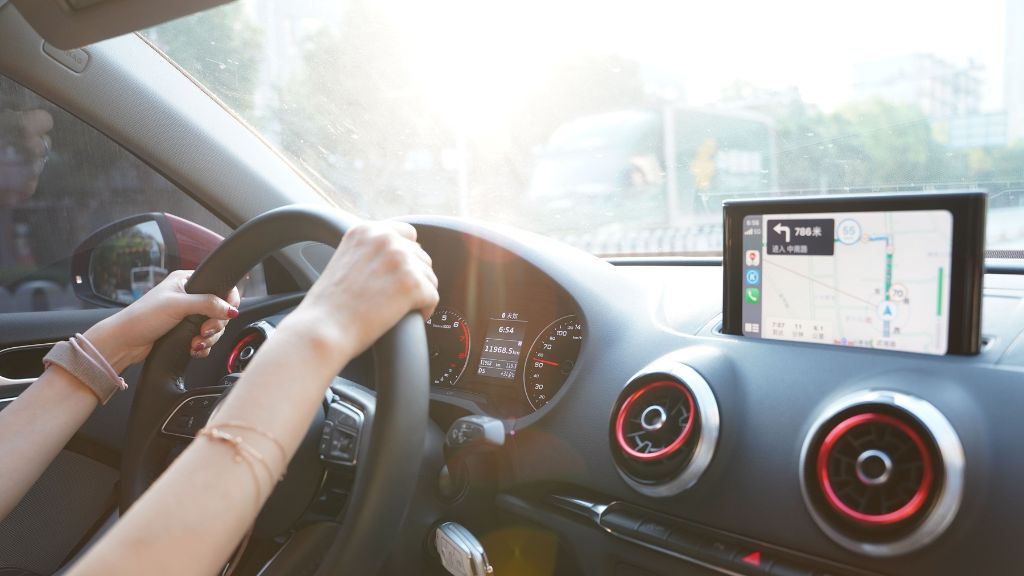
The instinct is to brake. This is wrong. Hard braking with a blown front tyre dramatically worsens the instability. What works: grip the wheel firmly with both hands, do not brake and do not accelerate, let the car slow naturally through rolling resistance over 10 to 15 seconds, steer gently toward the left shoulder, and only apply brakes gently once the speed has reduced to below 60 km/h. The car will pull toward the blown tyre side – counter it with gentle steering input, not a sharp correction.
For breakdowns that do not involve loss of control: get the car completely onto the shoulder and as far from the active lanes as possible. Switch on hazard lights immediately. Place warning triangles 50 metres and 100 metres behind the car in the direction of oncoming traffic. Get all occupants out of the car through the door away from traffic and stand on the road verge, not between the car and the carriageway. Call the NHAI helpline (1033) and your roadside assistance number. On busier highways, a word to the nearest toll plaza is also useful – they often have relationships with local assistance.
The Rest Stop Reality
India’s highway rest stop infrastructure has improved genuinely in the last five years. On major routes like NH48, NH44, and the Mumbai-Pune Expressway, there are now proper dhabas, petrol pumps, clean (or at least functional) washrooms, and in some cases fast food outlets at intervals of 60 to 90 km.
On secondary national highways and state highways, the situation is more variable. A rule I follow on unfamiliar routes: fill fuel whenever the tank drops to a quarter, rather than waiting for the low fuel light. On some stretches, the gap between petrol stations can be 80 to 120 km. On rural state highways, it can occasionally be more. Running out of fuel in these stretches is an inconvenience that is entirely avoidable with a quarter-tank discipline.
The food situation at highway dhabas is, in my experience, generally fine if you choose busy ones. A busy dhaba turns over food quickly – what you eat was cooked recently. A quiet dhaba on an otherwise busy route is worth being more selective about.
What Highway Driving Has Given Me
I was cautious about highways for the first year of driving. Cautious in the right way – aware of my own inexperience, deliberate about checking mirrors before lane changes, conservative about overtaking gaps. That caution was appropriate. It is also temporary if you put in the hours.
After perhaps 8,000 km of highway driving spread over the last two years, the road feels significantly different. Not easier exactly – the hazards are the same. But the observation habits, the anticipation of what might happen around the next bend or when you approach a slow vehicle, the sense of where your car is relative to everything else – these become more automatic. Highway driving in India is genuinely manageable once you understand its specific logic. Understanding that logic before you encounter it at 100 km/h is the whole point of a guide like this one.
Frequently Asked Questions
Q: What speed should I drive on Indian highways as a new driver?
For a new highway driver, 80 to 90 km/h is a comfortable learning speed on good four-lane highways. This keeps you in the left lane without impeding faster traffic, gives you adequate reaction time for hazards, and is well within legal limits. As your highway observation skills develop over thousands of kilometres, you will naturally feel comfortable at higher speeds on clear stretches. Do not rush this development – the skill that takes time to build is not speed, it is the ability to read 400 to 500 metres of road ahead simultaneously.
Q: Is it safe to drive at night on Indian highways?
Night driving on well-divided highways like NH48 and the Mumbai-Pune Expressway is manageable with appropriate care. Night driving on undivided two-lane state highways is significantly more demanding and best avoided by new drivers until substantial highway experience is built up. The specific risks at night – unlighted vehicles, high beam from oncoming traffic, fatigue – are real and require specific techniques to manage safely.
Q: What should I keep in my car for highway drives in India?
Warning triangles (two, not one), a torch with working batteries, a first aid kit with basic supplies, jumper cables, a tow rope, a portable tyre inflator that works from the 12V socket, drinking water for all occupants, and a phone charger cable. The NHAI helpline number (1033) should be saved in your phone before you start. These are not theoretical precautions – each one addresses something that actually happens on Indian highways with regularity.