
May 29, 2026 is a date that will be remembered in Indian automotive history. On that day, Toyota Kirloskar Motor quietly did something it had never done before in 28 years of operating in India: it launched a battery electric vehicle. The Toyota Urban Cruiser Ebella is not just another electric SUV – it is a statement from the world’s largest car manufacturer that India’s EV transition is now mainstream enough for Toyota to commit to it.
The Ebella is a rebadged Maruti Suzuki eVitara, built on the Suzuki-Toyota joint BEV platform. It shares mechanicals, battery packs, and most features with the eVitara but wears Toyota’s design identity, gets Toyota’s warranty and after-sales commitment, and brings the Toyota badge to a segment where that badge still carries enormous trust for millions of Indian buyers. This comprehensive review covers everything you need to know before walking into a Toyota dealership.
Toyota Urban Cruiser Ebella – What Makes It Historic
Toyota has sold cars in India since 1997. Through all those years – through the Qualis, Innova, Fortuner, Etios, Glanza, and Urban Cruiser generations – Toyota never launched a battery electric vehicle. The company’s global strategy has long prioritised hybrids (strong hybrid, mild hybrid) over pure EVs. The Ebella marks a fundamental shift: Toyota has acknowledged that the Indian EV market has reached a volume and infrastructure maturity that justifies a direct BEV entry.
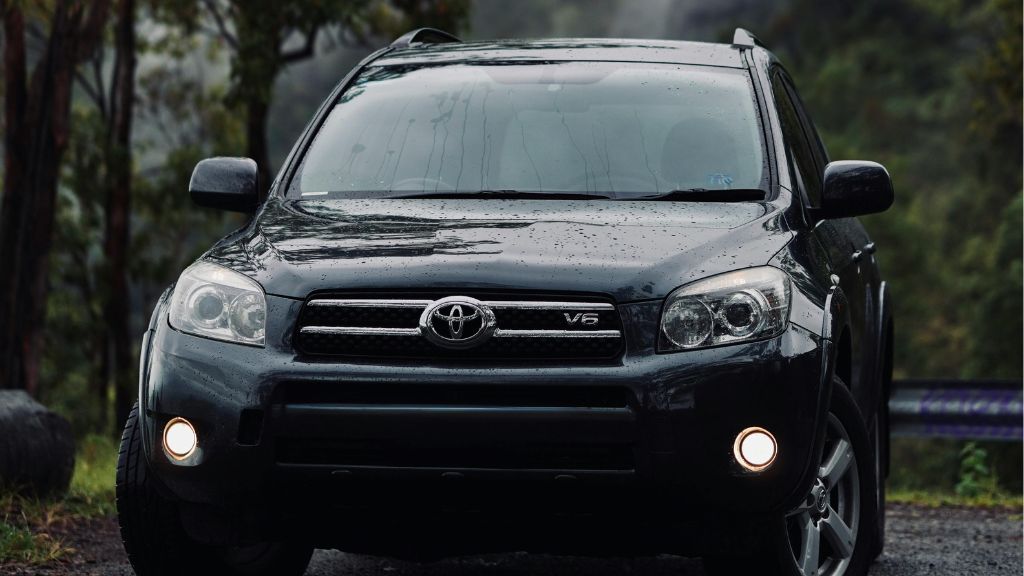
The decision to badge-engineer from the Maruti eVitara (rather than building a standalone Toyota EV platform) is deliberate and smart. It allows Toyota to enter the market quickly, leverage Maruti’s proven LFP battery technology and manufacturing at Suzuki Motor Gujarat, and maintain competitive pricing. Toyota contributes its dealer network, its trust brand value, and its superior warranty and after-sales framework. The result is a product that is simultaneously more accessible than a pure Toyota development and more trustworthy than a brand-new platform.
2026 Toyota Urban Cruiser Ebella – Design: How Is It Different from eVitara?
The Ebella and eVitara share the same body shell, dimensions, and platform. Toyota’s design team has applied enough differentiation to make them clearly distinguishable:
- Front fascia: Triangular LED headlamps linked by a thick black trim bar running across the full width of the front – sharper and more angular than eVitara’s softer look
- DRLs: Segmented LED daytime running lamps sit above the headlamp units – a distinctive signature
- Front bumper: Vertical air vent slots on the outer edges give a more aggressive stance
- Rear: Segmented tail lamps replace eVitara’s full-width light bar – cleaner, more restrained
- Side: Body cladding along lower sections, door handles integrated into C-pillar on rear doors
- Colours: 9 options including 5 monotones and 4 dual-tone combinations – more variety than eVitara
Overall, the Ebella’s design is slightly more conservative and mainstream than the eVitara. Toyota has deliberately avoided the eVitara’s more adventurous styling choices. The result is a car that will appeal to buyers who find the eVitara’s design too distinctive – and Toyota’s traditional customer base tends to be more conservative.
2026 Toyota Urban Cruiser Ebella – All Variants and Complete Price List
Toyota is offering the Ebella in three variants – E1, E2, and E3. The top E3 price has been officially announced at Rs 23.60 lakh. Full pricing for E1 and E2 variants is expected within 2–3 weeks of launch.
| Variant | Battery Pack | Power | ARAI Range | Ex-Showroom Price |
| E1 | 49 kWh LFP | 128 kW (174 PS) | 440 km | Rs ~18.00 lakh (expected) |
| E2 | 61 kWh LFP | 128 kW (174 PS) | 543 km | Rs ~21.50 lakh (expected) |
| E3 | 61 kWh LFP | 128 kW (174 PS) | 543 km | Rs 23.60 lakh (confirmed) |
| IMPORTANT: Only the E3 top-spec price (Rs 23.60 lakh) is officially confirmed as of June 2, 2026. E1 and E2 prices are estimated based on eVitara pricing structure. Toyota is expected to announce full pricing within 2–3 weeks. |
Toyota Urban Cruiser Ebella E3 – Full Features List (Top Variant)
The E3 is the fully-loaded Ebella and the only variant for which prices and features are completely confirmed. Here is everything it includes:
Exterior
- Triangular bi-LED projector headlamps with connected LED DRL signature
- 16-inch aerodynamic alloy wheels
- Power-folding ORVM with integrated turn signals
- Auto-opening and closing rear boot lid
- 360-degree surround-view camera system
Interior and Infotainment
- 10.25-inch floating touchscreen with wireless Android Auto and Apple CarPlay
- 10.1-inch digital driver’s display with full TFT cluster
- Wireless charging pad (15W)
- JBL premium 6-speaker audio system
- 12-colour ambient lighting throughout cabin
- Ventilated front seats – critical feature for Indian summers
- Powered driver’s seat with memory function
- Panoramic sunroof
- Automatic climate control with rear AC vents
Safety and Driver Assistance (ADAS Level 2)
- Pre-Collision System with Pedestrian and Cyclist Detection
- Lane Departure Alert with Steering Assist
- Adaptive Cruise Control with Lane Tracing Assist
- Automatic High Beam
- Blind Spot Monitor with Rear Cross-Traffic Alert
- 6 airbags standard
- Electronic Stability Control, Hill Start Assist, Hill Descent Control
Battery and Charging
- 61 kWh LFP (Lithium Iron Phosphate) battery – thermally stable, long cycle life
- CCS2 DC fast charging port: 10–80% in approximately 45 minutes (70 kW charger)
- 11 kW AC onboard charger: full charge in approximately 5.5 hours on wallbox
- V2L (Vehicle-to-Load) function: power external devices directly from the car battery
- 8-year / 1,60,000 km battery warranty
- 60% buyback value guarantee after 3 years
- BaaS (Battery-as-a-Service) subscription option available
Toyota Urban Cruiser Ebella – Real-World Range: What to Actually Expect
Toyota claims 543 km ARAI range for the 61 kWh E2 and E3 variants. The 49 kWh E1 claims 440 km. These are India’s ARAI test figures – significantly more optimistic than real-world driving. Based on eVitara owner data (same platform and battery) and our analysis of similar LFP EV platforms in Indian conditions, here are realistic range expectations:
| Condition | 49 kWh (E1) | 61 kWh (E2/E3) |
| ARAI Claimed | 440 km | 543 km |
| City driving (AC on, traffic) | 260–300 km | 320–370 km |
| Highway at 100 km/h | 310–350 km | 380–430 km |
| Mixed real-world (daily average) | 280–330 km | 340–400 km |
| Highway at 120 km/h (expressway) | 270–310 km | 340–385 km |
The LFP battery chemistry in the Ebella is worth understanding. Lithium Iron Phosphate batteries have three key advantages over NMC (Nickel Manganese Cobalt) chemistries used in some competitors: they are safer (no thermal runaway risk), they degrade less over thousands of charge cycles, and they perform more consistently in India’s extreme heat. The trade-off is slightly lower energy density – which is why the ARAI range is slightly lower than what some NMC-based competitors claim. For Indian buyers, the LFP’s long-term reliability advantage outweighs this paper range gap.
| REAL-WORLD VERDICT: Plan your trips around 300-380 km of real-world range from the 61 kWh E2/E3. The 49 kWh E1 is best for pure urban use where 260-300 km daily is adequate. Both variants can DC fast charge to 80% in 45 minutes, making highway trips practical. |
Toyota Ebella vs Maruti Suzuki eVitara – Are They the Same Car?
The most common question being asked about the Ebella. Short answer: they are 95% the same car. Here is the breakdown:
| Feature | Toyota Ebella | Maruti Suzuki eVitara |
| Platform | Suzuki-Toyota joint BEV platform | Same |
| Battery options | 49 kWh & 61 kWh LFP | 49 kWh & 61 kWh LFP |
| Motor output | 128 kW (174 PS) | 128 kW (174 PS) |
| ARAI range | 440 / 543 km | 440 / 543 km |
| Headlamp design | Triangular with black link bar | Rounded with silver detail |
| DRL signature | Segmented upper DRLs | Integrated in headlamp |
| Tail lamps | Segmented segments | Full-width light bar |
| Colour options | 9 (5+4 dual tone) | 8 (5+3 dual tone) |
| Starting price | ~Rs 18 lakh (E1 expected) | Rs 17.49 lakh (Delta 49 kWh) |
| Top variant price | Rs 23.60 lakh (E3) | Rs 20.01 lakh (Alpha 61 kWh) |
| Battery warranty | 8 years / 1,60,000 km | 3 years / 1,20,000 km |
| Buyback guarantee | 60% in 3 years | Not offered |
| BaaS option | Yes | Yes |
| After-sales network | Toyota’s 1,000+ dealers | Maruti’s 4,000+ dealers |
The single most important difference between the Ebella and eVitara is Toyota’s battery warranty: 8 years versus Maruti’s 3 years. This is a significant confidence statement and a meaningful long-term ownership protection. Toyota is betting its brand reputation on the battery’s longevity – that is worth paying a premium for. The 60% buyback guarantee after 3 years is also unique and removes the single biggest used-car uncertainty around EVs.
Choose the eVitara if: you want the lower price point and Maruti’s larger service reach in smaller towns. Choose the Ebella if: you value the 8-year battery warranty and Toyota’s stronger reliability brand perception, and you have access to a Toyota dealer.
Toyota Ebella vs Hyundai Creta Electric vs Tata Nexon EV Max – Full Comparison
| Toyota Ebella E3 | Hyundai Creta Electric LR | Tata Nexon EV Max | |
| Price | Rs 23.60 lakh | Rs 23.25 lakh | Rs 19.44 lakh |
| Battery | 61 kWh LFP | 51.4 kWh NMC | 40.5 kWh NMC |
| Power | 174 PS | 171 PS | 143 PS |
| ARAI Range | 543 km | 510 km | 437 km |
| Real Range | 340–400 km | 340–390 km | 280–320 km |
| DC Fast Charge | 45 min (10–80%) | 58 min (10–80%) | 56 min (10–80%) |
| ADAS | Level 2 (full suite) | Level 2 (full suite) | Level 2 (partial) |
| Battery Type | LFP (safer, long life) | NMC | NMC |
| Battery Warranty | 8 yr / 1.6 lakh km | 8 yr / 1.6 lakh km | 8 yr / 1.6 lakh km |
| Sunroof | Yes (panoramic) | Yes (panoramic) | Yes |
| Ventilated Seats | Yes | Yes | No |
| V2L | Yes | Yes | No |
| Service Network | 1,000+ Toyota dealers | 1,400+ Hyundai dealers | 500+ Tata EV centres |
Toyota Ebella E3 vs Hyundai Creta Electric LR – The Closest Fight
At nearly the same price, this is the decision most buyers will face. The Ebella’s key advantages: larger 61 kWh LFP battery (safer chemistry, longer cycle life), faster DC charging at 45 minutes versus Creta’s 58 minutes, and Toyota’s reliability perception. The Creta Electric’s advantages: Hyundai’s larger dealer network (1,400+ vs Toyota’s 1,000+), slightly more dynamic driving character, and the Creta badge’s existing strong resale value in India. For pure real-world range and fast charging, the Ebella wins narrowly. For everyday ownership confidence and brand familiarity, many buyers will choose the Creta.
Why the Tata Nexon EV Max Loses This Three-Way Fight
The Nexon EV Max at Rs 19.44 lakh is Rs 4+ lakh cheaper than the Ebella E3. But at that price difference, the Nexon offers smaller battery, less range, no V2L, no ventilated seats, and slower charging. If budget allows even Rs 21 lakh, the Ebella E2 or Creta Electric offer substantially better capability. The Nexon EV remains the best choice below Rs 18 lakh – the Punch EV for under Rs 14 lakh is even better value at its price point.
Which Toyota Ebella Variant to Buy?
Toyota Ebella E1 (49 kWh) – For Pure Urban Commuters
The E1 with the 49 kWh battery is expected around Rs 18 lakh. Real-world range of 260–300 km is adequate for urban commuters driving under 150 km daily. If you live in Delhi, Mumbai, Bengaluru, Hyderabad, or Pune and have home charging, the E1 covers 99% of daily requirements comfortably. The savings versus the 61 kWh variants are significant. However, the feature set of E1 is not yet confirmed – if it lacks ventilated seats or ADAS, the savings are less compelling.
E1 best for: Pure city commuters with daily needs under 150 km. Strongly recommended only after full feature list is confirmed.
Toyota Ebella E2 (61 kWh) – Best Value in the Range
The E2 at approximately Rs 21.50 lakh (expected) gets the larger 61 kWh battery and 543 km ARAI range. Based on eVitara’s E2 equivalent variant, it is expected to include most of the E3’s features except some premium touches. For buyers who want maximum real-world range on a budget, the E2 is likely the sweet spot once pricing is confirmed.
E2 best for: Highway users and buyers wanting range confidence without paying E3 premium. Wait for official pricing before committing.
Toyota Ebella E3 (61 kWh, Top Spec) – The Only Confirmed Option Today
At Rs 23.60 lakh, the E3 is the fully-loaded Ebella with the complete feature list: panoramic sunroof, ventilated seats, 360-degree camera, JBL audio, full ADAS Level 2, V2L, and Toyota’s 8-year battery warranty. For buyers making a decision today and not wanting to wait for E1/E2 pricing, the E3 is the only option available. It competes directly with the Hyundai Creta Electric Long Range at Rs 23.25 lakh.
E3 best for: Buyers who want the complete Ebella experience now and prioritise Toyota’s warranty framework. Book this if the Creta Electric top variant is also on your list – compare both in person.
Toyota Ebella Pros and Cons – Honest Assessment
What We Love
- Toyota’s FIRST EV in India – historic, and Toyota does not launch anything half-heartedly
- 61 kWh LFP battery – safest chemistry available, zero thermal runaway risk, excellent long-term durability
- 8-year / 1,60,000 km battery warranty – best warranty confidence in the segment
- 60% buyback guarantee after 3 years – eliminates biggest used EV resale uncertainty
- 45-minute DC fast charging (10-80%) – best in class for this battery size
- V2L capability – power appliances, devices, or even another EV from the car battery
- Full ADAS Level 2 suite on E3 – Blind Spot Monitor, Adaptive Cruise, Lane Tracing
- Ventilated front seats on top variant – critical for Indian summer comfort
- 1,000+ Toyota dealer network – accessible across India
What Could Be Better
- Price: E3 at Rs 23.60 lakh is expensive. Hyundai Creta Electric LR at Rs 23.25 lakh offers comparable capability at Rs 35,000 less
- E1 and E2 prices still not announced – difficult to make variant decisions without full pricing
- Not AWD – FWD only configuration for all variants
- Interior design largely identical to eVitara – Toyota fans may want more distinctiveness inside
- No fog lamps even on E3 – an omission at Rs 23+ lakh
- Toyota’s dealer network (1,000) is smaller than Maruti’s (4,000) and Hyundai’s (1,400)
Toyota Ebella Battery Warranty and Buyback – Why It Matters
The two ownership support schemes Toyota offers are genuinely unique in India’s EV market:
8-Year / 1,60,000 km Battery Warranty: If your battery capacity falls below 70% of original within 8 years or 1,60,000 km (whichever comes first), Toyota replaces or repairs it. This is the longest battery warranty offered by any mainstream EV brand in India. It directly addresses the single biggest used-EV fear: battery degradation. The eVitara offers only 3-year battery warranty – the Ebella’s 8-year commitment is significantly stronger.
60% Buyback Guarantee: Toyota guarantees it will buy back the Ebella at 60% of ex-showroom price after 3 years. This eliminates the ‘what is my EV worth at resale’ uncertainty. At Rs 23.60 lakh purchase price, you are guaranteed Rs 14.16 lakh back after 3 years – regardless of used EV market conditions. No other mainstream EV maker in India offers this commitment.
BaaS (Battery-as-a-Service): An optional subscription model where you buy the car without the battery cost and pay per km for battery usage. This reduces upfront purchase price by approximately Rs 4-6 lakh and shifts battery replacement risk to Toyota. Suited for buyers who drive high mileage and worry about battery degradation over time.
Toyota Ebella Charging – Everything You Need to Know
The Ebella uses the CCS2 standard for DC fast charging – the most widely available fast charger connector in India. Here is the charging reality:
- Home AC charging (3.3 kW standard): Full charge in approximately 16-18 hours. Suitable as overnight top-up only.
- Home AC wallbox (7.4 kW): Full charge in approximately 8-9 hours. Most buyers’ primary charging method.
- Home AC wallbox (11 kW): Full charge in approximately 5.5 hours. Fastest home charging option.
- DC fast charger (50 kW CCS2): 10–80% in approximately 70 minutes.
- DC fast charger (70 kW): 10–80% in approximately 45 minutes.
- DC fast charger (150 kW+): 10–80% in approximately 25-30 minutes (maximum supported rate).
India’s CCS2 fast charging network is expanding rapidly. Tata Power, Charge Zone, Statiq, and NHAI-commissioned chargers on national highways provide increasing coverage. The Ebella’s 45-minute fast charge time makes highway trips with one planned charging stop genuinely practical for 400–500 km intercity routes.
| HOME CHARGING SETUP COST: An 11 kW AC wallbox installation for the Ebella typically costs Rs 18,000–30,000 (charger + installation). Toyota’s service centres can assist with installation arrangements. Factor this into your total ownership budget. |
On-Road Price Across Major Cities
Add these estimated amounts to the E3 ex-showroom price of Rs 23.60 lakh for on-road totals:
- Delhi: Add Rs 1.50–1.80 lakh → On-road approximately Rs 25.10–25.40 lakh
- Mumbai: Add Rs 2.00–2.40 lakh → On-road approximately Rs 25.60–26.00 lakh
- Bengaluru: Add Rs 2.20–2.60 lakh → On-road approximately Rs 25.80–26.20 lakh
- Hyderabad: Add Rs 1.90–2.30 lakh → On-road approximately Rs 25.50–25.90 lakh
- Chennai: Add Rs 1.80–2.20 lakh → On-road approximately Rs 25.40–25.80 lakh
- Pune: Add Rs 2.00–2.40 lakh → On-road approximately Rs 25.60–26.00 lakh
Always get on-road price in writing from your Toyota dealer. FAME-III subsidy eligibility (if applicable) and state-level EV subsidies can reduce the effective price – verify current scheme status at your dealership.
Should You Book the Toyota Ebella Right Now?
Book immediately if: You are comparing Ebella with Hyundai Creta Electric and want Toyota’s 8-year battery warranty and 60% buyback assurance. Also book if you are an existing Toyota customer who trusts the brand and wants maximum after-sales confidence in EV ownership.
Wait if: You want the E1 or E2 variants – full pricing is not yet out. Wait 2–3 weeks for complete pricing announcement before deciding between variants. Also wait if you want to do a back-to-back test drive with the Creta Electric LR before committing.
Skip if: Your daily driving is under 80 km and you have no highway charging need – the Tata Nexon EV (Rs 17.19 lakh) or MG Windsor EV (Rs 13.50 lakh) offer far better value at your usage level. The Ebella’s premium makes sense only when its larger battery and Toyota warranty framework are actually relevant to your driving pattern.
Toyota Urban Cruiser Ebella 2026 – Frequently Asked Questions
Q: What is the price of Toyota Urban Cruiser Ebella in India?
The Toyota Urban Cruiser Ebella top-spec E3 variant is officially priced at Rs 23.60 lakh (ex-showroom) as of May 29, 2026. Prices for the E1 (49 kWh) and E2 (61 kWh) variants have not yet been announced. E1 is estimated at approximately Rs 18 lakh and E2 at approximately Rs 21.50 lakh based on the eVitara pricing structure. Toyota is expected to announce full pricing within 2-3 weeks.
Q: Is the Toyota Ebella the same as Maruti Suzuki eVitara?
The Toyota Ebella and Maruti eVitara share the same platform, battery packs, motor, and most features. Key differences: the Ebella has different exterior styling (triangular headlamps, segmented DRLs, different bumper), more colour options, and critically offers 8-year battery warranty versus eVitara’s 3-year warranty. The Ebella also includes a 60% buyback guarantee. The Ebella is expected to be priced Rs 50,000–1,50,000 higher than equivalent eVitara variants.
Q: What is the real-world range of Toyota Ebella in India?
The Toyota Ebella 61 kWh claims 543 km ARAI range. Real-world range in Indian conditions: 320-370 km in city driving (AC on, stop-start traffic), 380–430 km on open highways at 100 km/h, and approximately 340-400 km in mixed daily use. The 49 kWh E1 claims 440 km ARAI with expected real-world range of 260–300 km city and 310–350 km highway.
Q: Toyota Ebella vs Hyundai Creta Electric – which is better?
Both are excellent electric SUVs at similar prices. The Ebella’s advantages: larger 61 kWh LFP battery (safer chemistry), faster 45-minute DC charging, 8-year battery warranty (vs Creta’s 8-year but with a different capacity threshold), V2L capability, and Toyota’s long-term reliability reputation. The Creta Electric’s advantages: slightly more affordable top variant (Rs 23.25 lakh vs Rs 23.60 lakh), Hyundai’s larger 1,400+ dealer network, and more established EV service expertise in India. Both are strong choices – the decision comes down to brand preference and whether Toyota’s buyback guarantee matters to you.
Q: How long does it take to charge the Toyota Ebella?
Toyota Ebella charging times: AC home charging (7.4 kW) – full charge in approximately 8-9 hours. DC fast charging (70 kW CCS2) – 10% to 80% in approximately 45 minutes. DC fast charging (150 kW) – 10% to 80% in approximately 25-30 minutes. The 45-minute DC fast charge time is one of the best in the segment and makes highway trips with one planned stop genuinely practical.
Q: What is the battery warranty on Toyota Ebella?
Toyota offers an 8-year or 1,60,000 km battery warranty on the Ebella, whichever comes first. This covers battery capacity falling below 70% of original capacity. Toyota also offers a 60% buyback guarantee after 3 years, and an optional BaaS (Battery-as-a-Service) subscription model that removes battery cost from the upfront purchase price.
Q: Is Toyota Ebella eligible for FAME subsidy in India?
Eligibility for FAME-III subsidy depends on the vehicle meeting specific localisation and price criteria. Verify current FAME-III subsidy status with your Toyota dealer at time of purchase, as scheme terms can change. Some state governments also offer additional EV subsidies on top of central schemes.
Q: Does Toyota Ebella support V2L (Vehicle to Load)?
Yes. The Toyota Urban Cruiser Ebella E3 supports V2L (Vehicle-to-Load), which allows you to power external appliances, devices, and even charge other EVs directly from the Ebella’s battery. The V2L output is typically 3.3 kW, sufficient to run home appliances during power cuts or outdoor activities.
Q: When can I take delivery of Toyota Ebella?
Toyota Ebella deliveries have commenced for the E3 variant immediately after the May 29, 2026 launch at authorised Toyota Kirloskar Motor dealerships. Booking token is typically Rs 25,000-50,000. Contact your nearest Toyota dealer for confirmed delivery timelines in your city.
Q: What are the colour options for Toyota Ebella 2026?
The Toyota Urban Cruiser Ebella 2026 is available in 9 colour options: 5 monotone colours and 4 dual-tone combinations. Specific colour names include options in white, silver, grey, blue, and red. Your Toyota dealer can show you the complete colour palette and dual-tone combinations available.
Q: Is Toyota Ebella a good first EV in India?
Yes – the Toyota Ebella is an excellent first EV for Indian buyers. Toyota’s brand trust and extensive dealer network reduce after-sales anxiety. The 8-year battery warranty removes long-term battery risk. The LFP battery chemistry is particularly well-suited to India’s heat. The 45-minute fast charging makes highway trips practical. And the 60% buyback guarantee means you can sell the car with confidence after 3 years knowing the resale floor. If budget allows Rs 23.60 lakh and you can find a Toyota dealer near your service needs, the Ebella is one of the most trustworthy EV purchase decisions available in India today.
Q: Toyota Ebella vs Maruti eVitara – which should I buy?
If you are in a metro or large city with a Toyota dealer: buy the Ebella for the 8-year battery warranty and 60% buyback guarantee – these are genuinely valuable for long-term EV ownership confidence. If you are in a smaller city or town where Maruti’s 4,000 service touchpoints are more accessible than Toyota’s 1,000 dealers: the eVitara’s wider service reach may be more practical, especially at a lower price point.
Q: What is Toyota’s after-sales network for Ebella service in India?
Toyota Kirloskar Motor operates approximately 1,000+ authorised dealerships across India. All Toyota dealers are being trained and equipped for Ebella EV service. Toyota’s service quality reputation in India – based on years of Innova, Fortuner, and hybrid service – means the after-sales experience for the Ebella is expected to be best-in-class for the EV segment, even if the network is smaller than Maruti’s.
Q: What are the rivals of Toyota Urban Cruiser Ebella?
The Toyota Urban Cruiser Ebella’s main rivals in India are: Maruti Suzuki eVitara (sibling vehicle, Rs 17.49–20.01 lakh), Hyundai Creta Electric (Rs 18.02–24.70 lakh), Tata Nexon EV Max (Rs 17.19–19.44 lakh), MG ZS EV (Rs 18.98–22.98 lakh), and Mahindra BE 6 (Rs 18.90–26.90 lakh). Among these, the Creta Electric LR is the most direct comparison for the E3 at a similar price.
Final Verdict – Toyota Urban Cruiser Ebella 2026
Design: 7.5/10 – Distinctive Toyota identity applied cleanly to the shared platform. More conservative than eVitara – broad appeal.
Range: 9.0/10 – 543 km ARAI / 340–400 km real-world from 61 kWh LFP is best-in-class for battery safety and long-term reliability.
Features (E3): 8.5/10 – Panoramic sunroof, ventilated seats, 360-camera, V2L, Level 2 ADAS, JBL audio – complete package.
Charging: 9.0/10 – 45-minute DC fast charge to 80% is class-leading at this price.
Warranty & Ownership: 9.5/10 – 8-year battery warranty + 60% buyback guarantee are unmatched in India’s EV market.
Value for Money: 7.5/10 – Rs 23.60 lakh E3 is Rs 35,000 more than Creta Electric LR for similar hardware. Toyota premium is real but justified by warranty terms.
Overall: 8.5/10 – Toyota’s first EV in India is a confident, well-backed product that earns its price premium through best-in-class ownership protection. For buyers who value long-term peace of mind over the lowest initial price, the Ebella is the best EV purchase in India today.
| MOTORSADDA VERDICT: The Toyota Urban Cruiser Ebella E3 is India’s most ownership-secure electric SUV. Buy it if Rs 23.60 lakh is within your budget, you drive regularly enough to use the 61 kWh battery’s range, and you want the confidence of Toyota’s 8-year warranty and 60% buyback assurance backing your EV investment. Book a test drive at your nearest Toyota dealer – and compare it back-to-back with the Hyundai Creta Electric LR before signing. |