| This guide covers documents, mechanical inspection, test drive and ownership transfer. Take a trusted mechanic with you if you are not confident; a Rs 500-1,500 inspection can save lakhs. |
A used car can be the smartest purchase you ever make, because a new car loses a big part of its value in the first few years. It can also be the worst, if you end up with a flood-damaged, accident-repaired or loan-encumbered car. The difference comes down to checking the right things in the right order. This checklist walks you through it.
Step 1 — Check the Paperwork First
Do not even test drive until the documents look right. If the paperwork is bad, nothing else matters.
| Document | What to Verify |
| RC (Registration Certificate) | Name of owner matches seller; chassis and engine numbers match the car; registration date; fuel type and colour |
| Insurance policy | Valid? Policy type? Claim history and NCB status |
| PUC certificate | Valid pollution certificate |
| Service records | Regular authorised servicing is a very good sign |
| Loan / hypothecation status | RC should not show bank hypothecation unless the loan is cleared and a NOC is issued |
| Road tax / permit | Paid for the state, and valid if the car is moving states |
| Challans (traffic fines) | Check for pending fines and clear them before transfer |
| Form 29 / 30 and ID proofs | Needed to transfer ownership |
Tip: You can verify RC details yourself on the Parivahan portal or the mParivahan app. See our guide on how to check car RC online.
Step 2 — Number of Owners and Age
- Fewer owners is generally better; first-owner cars with records are the best.
- Very low kilometres on a very old car is suspicious. A car does not normally run only a few thousand km in many years.
- Check the odometer against service records. Digital odometers can be tampered with, so cross-check with service history.
Step 3 — Exterior Inspection
- Look at the car in daylight, on level ground, when it is dry.
- Check panel gaps; uneven gaps or mismatched paint shades suggest repainting after an accident.
- Look for overspray on rubber seals, door edges and under the bonnet.
- Check for rust around door bottoms, wheel arches and under the boot mat.
- Inspect the windscreen and all glass for fresh cracks and for matching manufacturer markings.
- Check headlamps, tail lamps and indicators; mismatched or newly replaced units can indicate a collision.
Step 4 — Tyres, Brakes and Suspension
- Uneven tyre wear can signal alignment or suspension problems.
- Check the tyre manufacture date code; very old tyres need replacing regardless of tread.
- Press down on each corner; the car should rebound once and settle. Repeated bouncing means weak shock absorbers.
- Listen for knocking sounds over bumps on the test drive.
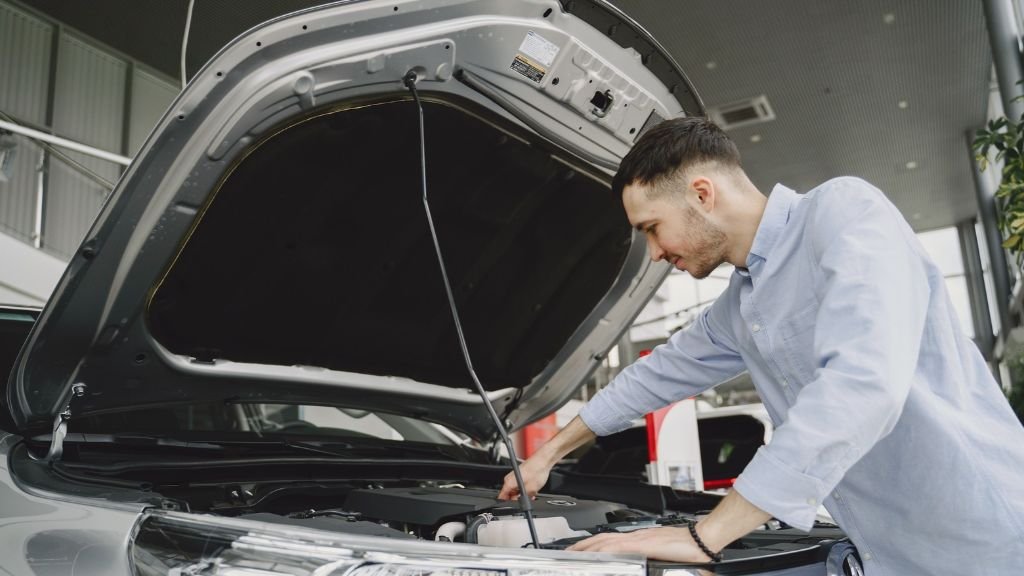
Step 5 — Under the Bonnet
- Engine should be cold when you arrive. Ask the seller not to start it before you come; a pre-warmed engine can hide cold-start problems.
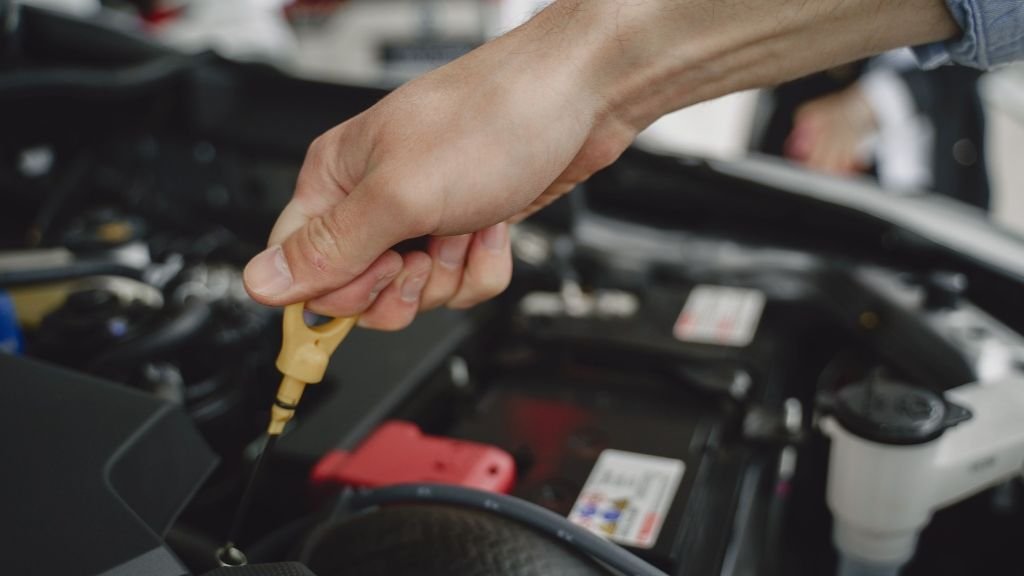
- Check engine oil on the dipstick: dark is normal, but milky or sludgy oil is a warning.
- Check coolant level and colour; oily coolant is a red flag.
- Look for oil or fluid leaks on the engine and ground.
- Check the battery terminals for corrosion and the date of the battery.
- Look at belts and hoses for cracks.
Step 6 — Interior and Electronics
- Smell the cabin: a musty or damp smell can mean flood damage.
- Lift the floor mats and boot carpet and look for water marks, mud or rust.
- Test the AC at full cooling for several minutes.
- Test power windows, central locking, infotainment, lights, wipers and all warning lights on the dashboard.
- Check that all airbag lights go off after starting. An airbag light that stays on, or is missing from the dash test, needs explanation.
Step 7 — The Test Drive
| What to Do | What You Are Looking For |
| Start from cold | Easy starting, no heavy smoke from exhaust |
| Drive at low speed | Smooth gearshifts, no jerking, no clutch slip |
| Drive at highway speed | Steering stays straight, no vibration |
| Brake firmly | Car stops straight, no pulsation or noise |
| Drive over bad road | Listen for rattles and knocks from suspension |
| Park and turn lock to lock | No grinding sounds from steering or CV joints |
Step 8 — Get a Professional Inspection
If you are not a car person, pay for an independent inspection by a trusted mechanic or a reputed inspection service. It usually costs a small fraction of the car’s value and can reveal hidden accident damage, flood damage or engine issues. Never rely only on the seller’s mechanic.
Step 9 — Negotiate Using What You Found
- Compare similar cars (same model, year, kilometres) on multiple listing sites to know the fair price range.
- Use defects you found, upcoming tyre or battery replacement, and pending service as negotiation points.
- Be ready to walk away. There are always more cars.
Step 10 — Complete the Transfer Properly
- Sign Form 29 and Form 30 and collect the original RC, insurance, PUC and keys.
- Apply for ownership transfer at the RTO within the legal time limit.
- Transfer or buy insurance in your name immediately.
- If the car is from another state, ask for the NOC and understand re-registration rules.
- Never accept a ‘RC will come later’ promise; insist on original documents.
| Also Read: How to Transfer Car Insurance When Selling Car India | |
Frequently Asked Questions
Q: What is the most important thing to check when buying a used car?
The documents. A clear RC in the seller’s name, no pending loan or hypothecation, valid insurance, and matching chassis and engine numbers. A great car with bad paperwork is a bad purchase.
Q: How can I know if a car was in an accident?
Look for uneven panel gaps, paint overspray, mismatched shades, replaced lamps, and welded or repaired metal under the bonnet and in the boot. A professional inspection is the most reliable way to check.
Q: How can I identify a flood-damaged car?
Check for a musty smell, silt or rust under carpets, water lines in the boot or under seats, foggy lights, and corroded electrical connectors. Walk away if you suspect flooding.
Q: Is it safer to buy from a dealer or an individual?
Both can be fine. Reputed dealers may offer inspection and a limited warranty, usually at a higher price. Individual sellers can be cheaper, but you must do the checks yourself. In both cases, verify documents carefully.