If you follow Indian car news, you have probably noticed that the JSW Jetour car has been given at least three different launch dates, four different price ranges and two different names. That is not because journalists are careless. It is because JSW Motors has said very little officially, and every car portal is filling the silence with its own estimate.
So this guide does something simple. It separates what is confirmed from what is only reported, and what is plain guesswork. I will tell you where the sources disagree, which numbers I would trust more, and what I would wait for before putting down a booking amount on a car from a brand that has never sold a car in India before.
The Short Version
- What it is: the India version of the Jetour T2, a large, boxy five-seat SUV that is already on sale in markets like Brazil and Malaysia.
- When: reports point to a debut on 3 or 4 December 2026. A debut is not the same as a price launch, and that difference matters for your wallet.
- Price: not announced. Published estimates run from about Rs 20 lakh all the way to Rs 41 lakh, which tells you how much of this is guesswork.
- Engines reported: a 2.0-litre turbo petrol with four-wheel drive, and a 1.5-litre turbo plug-in hybrid.
- Rivals named by the press: Tata Harrier, Tata Safari, Jeep Meridian, MG Hector and Mahindra XUV 7XO.
Who Is Actually Behind This Car
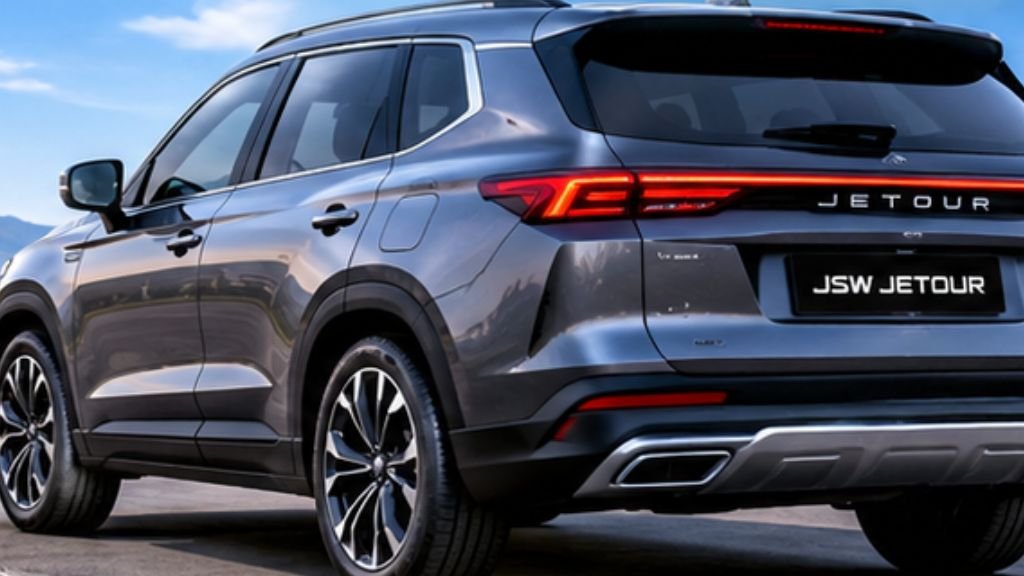
Two names are involved, and people mix them up. JSW is the Indian industrial group best known for steel and energy. JSW Motors is its new car venture, and the Jetour T2 is reported to be its first product. Jetour, on the other hand, is a vehicle brand that belongs to Chery, one of China’s biggest carmakers.
This is separate from the MG cars you already see on Indian roads. JSW MG Motor India is a different arrangement, and the T2 is not an MG. Keeping that straight will save you some confusion when you read forum comments, where the two are often lumped together.
The T2 itself is not a new or untested design. In China it is sold as the Jetour Traveller, with pre-sales having opened back in August 2023, and a longer three-row version followed in 2024. It reached Brazil on 28 January 2026 and Malaysia on 13 March 2026, and it is sold in Iran under a different badge. One report on the Brazilian car says it launched there with a 1.5-litre plug-in hybrid in front-wheel-drive form, in two trim levels called Advance and Premium.
There is also a naming question. One encyclopedia entry says the India version will be sold as the JSW Combat, with an unveil on 4 December 2026. Car portals mostly still call it the Jetour T2 and give 3 December as the debut date. I would treat the name as unconfirmed until JSW says it on stage. JSW has, however, patented the T2 i-DM design and powertrain in India, which tells you the plug-in hybrid is being taken seriously.
Launch Date: Why It Keeps Moving
Earlier this year the talk was all about an October or Diwali launch. Reports then shifted to a debut at the start of December. If you were waiting for a festive-season price, that is a disappointment, but it is also normal. New brands tend to slip because they are building a dealer network and getting approvals at the same time.
The thing to understand is the gap between three events: the unveil, the price announcement and deliveries. At an unveil you usually see the car and hear the broad plan. The price sometimes comes on the same day and sometimes weeks later. Deliveries can lag further. So if the car is shown on 3 or 4 December, do not assume you can walk into a showroom the next morning with a confirmed on-road price.
Size and Design: This Is a Big Car
The reported dimensions are 4,785 mm long, 2,006 mm wide and 1,880 mm tall. The press describes it as being close to the size of the Tata Harrier and the Mahindra XUV 7XO. At just over two metres wide, it is a car that will feel generous on the highway and demanding in tight city parking, so measure your garage gate before you fall in love with it.
Styling is upright and boxy, in the current fashion for rugged-looking SUVs. The colours listed for the car include Night Black, Sand, Sun Orange, Lime Green, Misty Cyan and Silver Snow. The orange and the lime are the ones that will get noticed in traffic.
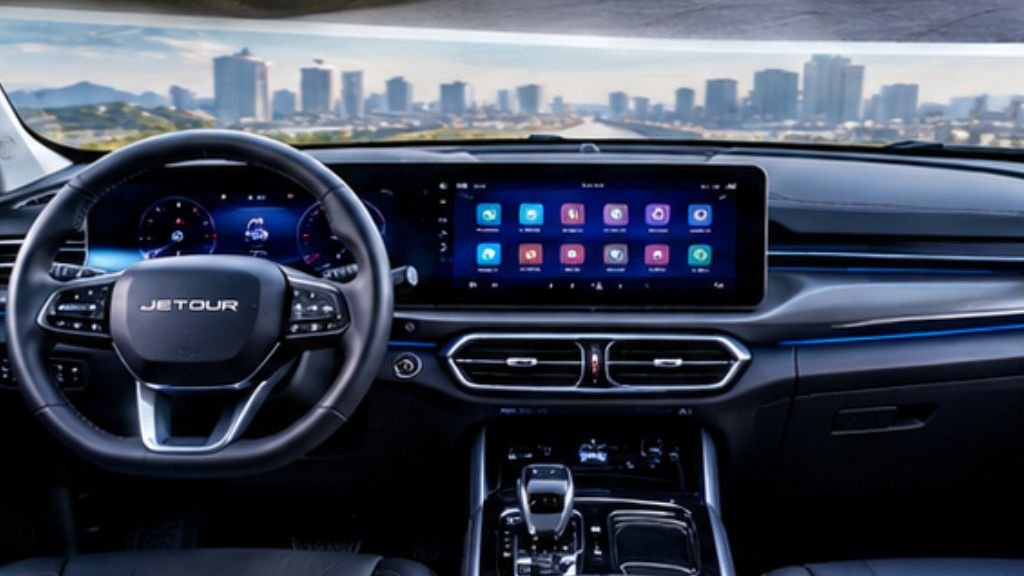
A fair warning: I have not seen an official India interior reveal, so I am not going to describe the cabin or the feature list as confirmed. One portal lists six airbags for the top variant, but that is a listing, not a manufacturer statement. Until JSW publishes a feature sheet, treat every feature claim, including sunroof, screen sizes and driver assistance, as unconfirmed.
Engines: Two Very Different Cars Under One Badge
Option 1: 2.0-litre turbo petrol with four-wheel drive
The listed figures for this engine are 251 bhp at 5,500 rpm and 390 Nm of torque between 1,750 and 4,000 rpm. It is a four-cylinder unit, paired with a 7-speed dual-clutch automatic, with four-wheel drive on the top variants. The listing also gives a 70-litre fuel tank, a top speed of 180 km/h and BS VI 2.0 emission compliance.
Those numbers put it in a similar performance bracket to the more powerful diesels in this size of SUV, but with petrol refinement. The trade-off is fuel economy. A large turbo petrol with four-wheel drive will not be frugal, and no official mileage figure has been published.
Option 2: 1.5-litre turbo plug-in hybrid (i-DM)
This is the more interesting engine on paper. The global specification is quoted at around 381 hp and 610 Nm of combined output, with an electric-only range of about 139 km. A plug-in hybrid has a petrol engine plus a battery you can charge from a socket, so you can drive on electricity for short trips and still have a petrol engine for long ones.
Two cautions. First, the 139 km figure is a claim measured under a test cycle, and real-world electric range is normally lower, especially with the air-conditioning running in an Indian summer. Second, none of this has been confirmed for the India-spec car. JSW could launch with only one engine, or with a detuned version of the plug-in hybrid.
A plug-in hybrid only makes financial sense if you can charge it at home most nights. If you cannot, you are carrying a heavy battery around for no reason.
Price: Why Estimates Range From Rs 20 Lakh to Rs 41 Lakh
Here is a snapshot of what different sources were saying when I checked. None of these are official.
| Source type | Estimate reported |
| Car portal, news article | Around Rs 30 lakh onwards (ex-showroom) |
| Car portal, model page | Rs 30 to 40 lakh range; separate page lists Rs 18 to 25 lakh |
| Car portal, variant estimates | 1.5 turbo about Rs 38 lakh; 2.0 turbo 4WD about Rs 40 lakh; top 4WD about Rs 41 lakh |
| Car portal, listing | Rs 30 to 45 lakh |
| Another portal page | Rs 20 to 25 lakh |
Why the spread is so wide: nobody outside JSW knows the answer to three questions. Will the car be imported as a built unit or assembled in India? Which engines will actually be offered? And will JSW price aggressively to win customers for a brand nobody knows yet?
My own reading, and it is only an opinion: a car this size with a 251 bhp turbo engine and four-wheel drive is hard to sell profitably for Rs 20 to 25 lakh, so I would expect the bigger-engine versions to start well above that. A lower headline price is plausible only if the first variant is a simpler front-wheel-drive plug-in hybrid or if JSW chooses to take a loss to build volume. Wait for the official number.
Who Will It Compete With
The press lists the Harrier, Safari, Meridian, Hector and XUV 7XO as the obvious comparisons. I am deliberately not quoting their prices here because those change with every price revision. When JSW announces a price, compare on-road prices in your own city, not ex-showroom headlines.
| Rival | How the T2 might stack up (my view) |
| Tata Harrier / Safari | Tata has a large service network and strong safety credentials. The T2 will need to win on novelty, four-wheel drive and a plug-in hybrid option. |
| Jeep Meridian | Closest in rugged intent. The T2 may undercut it on features, but the Jeep brand carries off-road reputation. |
| MG Hector | Both are brands with Chinese roots. MG has a head start of several years in building trust and service. |
| Mahindra XUV 7XO | Mahindra has strong rural and semi-urban reach. The T2 has no such footprint on day one. |
The Real Question: Should You Trust a Brand-New Name?
This is where most buyers should spend their thinking time, not on the spec sheet. A car is not a phone. You will live with it for years, and what matters is what happens in year three, when something breaks on a Sunday evening.
MG arrived in India in 2019 as a new name too, and it built its network over time. That is a hopeful precedent, but it is not a guarantee for JSW. Before booking, ask the dealer these questions and write the answers down:
- How many service centres will there be in my city, and how far is the nearest one from my home?
- Where are spare parts stocked, and what is the typical wait for a body panel or a sensor?
- What is the warranty on the car, and separately on the hybrid battery if I choose the plug-in?
- How are software updates delivered, and who is responsible when the infotainment misbehaves?
- Is there any buy-back or assured resale scheme in the first few years?
- Has the car been, or will it be, tested for crash safety under India’s own programme?
If a dealer cannot answer these clearly, that tells you something about how ready the brand is.
Who Should Wait, and Who Could Consider It
Better to wait if:
- You want a confirmed price and feature list before committing. Both are missing today.
- You need a seven-seater. The India car is reported as a five-seater, even though a longer three-row version exists in China.
- You live in a smaller town where a new brand may have no workshop for a long time.
Could consider it if:
- You want something visibly different from the usual Harrier and XUV crowd.
- Four-wheel drive and a plug-in hybrid option matter to you, and you have home charging.
- You are comfortable being an early adopter and have checked the service situation in your own city.
What I Would Look For at the December Unveil
- The official name. Is it Jetour T2, JSW Combat, or something else?
- Which engines are on sale at launch, and which come later?
- Whether the plug-in hybrid is available from day one, and in what power output.
- The price date: on stage, or announced separately?
- Where the car is built or assembled, and how many units JSW plans per month.
- The booking amount, the refund terms and the stated delivery timeline.
- The size of the dealer and service network at launch, with city names.
Do You Actually Need Four-Wheel Drive?
Four-wheel drive is the feature that gets the most attention in pre-launch coverage, and it is also the one most city buyers will never use. It is worth being honest about what it does and what it costs.
What it does: it sends power to all four wheels, which helps on loose surfaces such as wet grass, sand, gravel and steep muddy slopes. In heavy monsoon rain on a badly drained road it can help you get moving. What it does not do: it does not help you stop faster, and it does not make the car safer on a wet highway. Tyres and driving speed matter far more for braking.
What it costs: usually a higher purchase price, extra weight and slightly higher fuel consumption, plus more components that can eventually need servicing. For a driver who does most of their kilometres on tarmac, a front-wheel-drive version with good tyres is the sensible pick. If you regularly drive to hill stations, travel on unpaved village roads or live somewhere with seasonal flooding, four-wheel drive starts to earn its keep.
So when JSW announces its variants, I would look at whether the cheaper versions drop four-wheel drive, and by how much, rather than assuming the top version is the one you should buy.
Plug-in Hybrid Running Costs: A Way to Work It Out Yourself
Because no official efficiency figure exists, I cannot tell you what the T2 will cost per kilometre. What I can do is show you how to work it out once the numbers arrive, using your own electricity tariff and driving pattern.
- Step one: find out how many kilometres you drive on a normal day. If it is within the claimed electric range, most of your driving could be on electricity.
- Step two: ask how many units of electricity the car uses per kilometre. Multiply that by your tariff per unit to get the cost per kilometre on electricity.
- Step three: do the same for petrol by dividing the fuel price per litre by the kilometres you get per litre.
As an illustration only, and not a claim about the T2: if a large plug-in hybrid used 0.2 units of electricity per kilometre and your tariff were Rs 8 per unit, electric running would cost about Rs 1.60 per kilometre. A large petrol SUV doing 10 km/l with petrol at Rs 100 per litre would cost about Rs 10 per kilometre. The gap looks huge, but it only exists on the days you actually charge, and it ignores the extra purchase price of the hybrid. Divide that extra price by your yearly saving to see how many years it takes to pay back.
If your home has no dedicated parking where you can plug in, that payback may never arrive. This is the single most important question for any plug-in hybrid buyer, and it has nothing to do with the car itself.
What the Global T2 Can and Cannot Tell You
Because the T2 has been on sale in China, Brazil, Malaysia and elsewhere, it is tempting to read owner reviews from those countries and assume India will be the same. Some of it will carry over, and some will not.
- What carries over: the basic design, the cabin layout, how the engine and gearbox behave, and general build-quality impressions.
- What may not: the exact feature list, the suspension tuning for local roads, the fuel quality the engine is calibrated for and, most importantly, the quality of after-sales support.
Another point worth remembering: reviews written soon after a launch tend to be kinder than reviews written after two years of ownership. When the car goes on sale in India, look for owner feedback after the first few months rather than only the launch-day reviews.
Living With a Two-Metre-Wide SUV in India
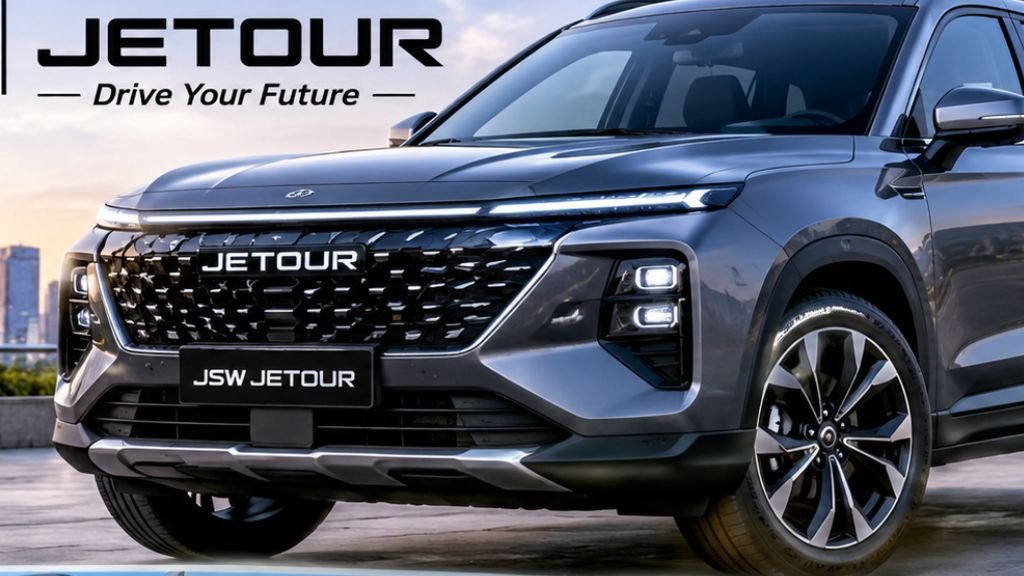
Width is easy to ignore on a spec sheet and hard to ignore in a narrow lane. At over two metres before you count the mirrors, the T2 will need more room than many Indian parking bays and older apartment gates were designed for. Before booking, measure your gate and your parking slot, and test-drive the car on the roads you use every day, not just on a showroom loop.
Two more things to check once details arrive: ground clearance, which has not been confirmed, and the turning circle. A big SUV with a poor turning circle is tiring in a crowded market street. And because the car is longer than four metres and has large engines, it is likely to fall into a higher tax bracket than small cars under current rules, so confirm how taxes affect the final price when JSW announces it.
How to Protect Yourself When Booking From a New Brand
- Get the booking terms in writing, including whether the booking amount is refundable and under what conditions.
- Ask for the price to be confirmed on the day of delivery, not just the day of booking. Some launches see a price hike between the two.
- Confirm the dealer is authorised by checking the company’s own website, not just the dealer’s word.
- Check insurance and extended-warranty options before you pay. Insurers can be unfamiliar with a brand-new model at first, which can slow claims.
- Do not pay the full on-road price in advance. A booking amount is normal; a large deposit before a confirmed delivery date is a warning sign.
None of this is meant to scare you off. It is the same checklist I would apply to any new car launch, and new brands simply deserve a little more caution because they have no track record yet.
Frequently Asked Questions
Is the JSW Jetour car officially launched in India?
No. Reports point to an unveil on 3 or 4 December 2026. Price and on-sale dates have not been officially announced.
Is the JSW Jetour T2 the same as an MG?
No. It is a Jetour product from the Chery group, brought to India by JSW Motors. MG is a separate brand.
Will the Jetour T2 be a hybrid in India?
A 1.5-litre plug-in hybrid is the powertrain reported for the car, and JSW has patented the design in India. Whether it launches on day one is not confirmed.
What will the JSW Jetour T2 cost?
Nobody knows yet. Estimates range from about Rs 20 lakh to Rs 41 lakh. The bigger turbo petrol versions are more likely to sit toward the higher end.
Quick Summary
| Detail | Status |
| Model | Jetour T2 (India name unconfirmed; one source says JSW Combat) |
| Body and seats | Large SUV, five seats |
| Size | 4,785 x 2,006 x 1,880 mm (reported) |
| Engines reported | 2.0 turbo petrol, 251 bhp, 390 Nm, 4WD; 1.5 turbo plug-in hybrid |
| Gearbox reported | 7-speed dual-clutch automatic |
| Unveil | 3 or 4 December 2026 (reported) |
| Price | Not announced; estimates Rs 20 to 41 lakh |
| Biggest unknown | Service network and long-term ownership support |
Bottom line: the JSW Jetour car could be one of the more interesting launches of the next year, mainly because it brings a plug-in hybrid and four-wheel drive to a crowded segment. But excitement is not a reason to pay a booking amount on guesswork. Watch the December reveal, get the price in writing, and judge the brand on its service promise, not just its looks.