
Tata Motors has been building toward this moment for years. The Nexon EV proved that Indian buyers would embrace electric vehicles. The Punch EV brought that acceptance to a more affordable price point. The Curvv EV introduced a stylish coupe-SUV silhouette. Now comes the Aeries — Tata’s most ambitious electric vehicle to date, and arguably the most significant Indian passenger vehicle in the premium segment since the brand launched the Harrier in 2019.
The Aeries is not just another EV. It is Tata’s statement that it can compete with European and Korean premium electric SUVs on features, range, and technology — while offering the price advantage of being built in India for India. At the expected Rs 40-55 lakh price range, it takes on the Hyundai Ioniq 5, Kia EV6, and the lower-end of the BMW i range. That is an extraordinary ambition for a brand that, until recently, was known primarily for affordable hatchbacks and entry-level SUVs.
Design — A New Design Language for Tata
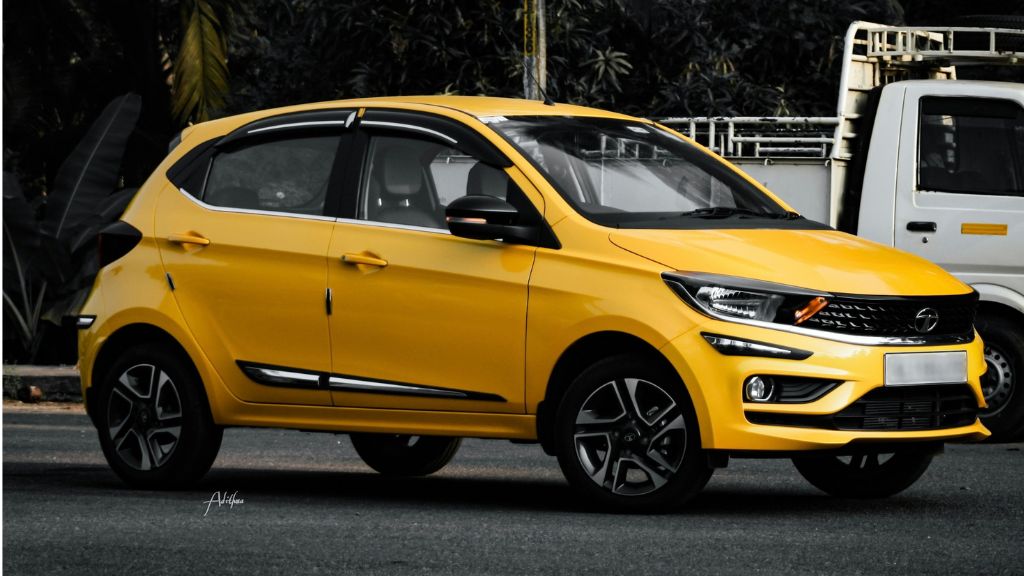
The Aeries marks Tata’s most dramatic design departure in the EV space. While the Nexon EV, Punch EV, and Curvv EV are all based on existing ICE platforms adapted for electric drivetrains, the Aeries is built ground-up on Tata’s new Generation 2 EV platform — purpose-built for electric, allowing a lower floor, wider cabin, and a completely different proportional language.
Exterior: Clean, aerodynamic large SUV silhouette. Flush door handles. Retractable door mirrors on top variants. Panoramic fixed glass roof spanning the entire cabin. LED lighting with dynamic sequential turn indicators. Tata’s new ‘Pinnacle’ grille design with illuminated logo. Wide track with flared arches.
Interior: Three-row seating available on the long wheelbase variant. Driver-focused cockpit with a large curved dual-screen setup — one for the driver, one for infotainment. Premium upholstery options including sustainable materials. Ambient lighting with 64 colours. Heads-up display standard on top variants.
Platform — Tata’s Generation 2 EV Architecture
The Generation 2 EV platform is the foundation of everything that makes the Aeries technically interesting. Unlike the Generation 1 platform (used on Nexon EV, Tiago EV, Punch EV) which adapted existing ICE platforms for electric, Gen 2 is designed from scratch as an EV:
- 800V architecture on top variants — enables ultra-fast charging (150kW+)
- Longer wheelbase than any current Tata passenger vehicle — more interior space
- Lower floor due to flat battery pack integration — improved headroom and step-in height
- Designed for twin-motor AWD as a native configuration, not an afterthought
- Air suspension on top variants — adjustable ride height for different conditions
- Vehicle-to-Grid (V2G) and Vehicle-to-Load (V2L) capability
Expected Specifications — What We Know
| Specification | Entry Variant (expected) | Top Variant (expected) |
| Platform | Tata Gen 2 EV | Tata Gen 2 EV |
| Battery | ~60-65 kWh | ~80-90 kWh |
| Motor | Single motor RWD | Twin motor AWD |
| Power | ~250 PS | ~400+ PS |
| Claimed Range | ~400 km | ~500-550 km |
| 0-100 kmph | ~7-8 seconds | ~4.5-5 seconds |
| Charging | 150kW DC fast charge | 150kW+ DC (800V) |
| Suspension | Conventional | Air suspension |
| Seating | 5-seat | 5 or 7-seat (LWB) |
Expected Price and Variants
| Variant | Expected Price | Battery | Key Features |
| Aeries Standard | Rs 40-45 lakh | ~60 kWh RWD | Single motor, 400km range, panoramic roof |
| Aeries Plus | Rs 45-50 lakh | ~65 kWh AWD | Twin motor AWD, more features |
| Aeries Pinnacle | Rs 50-55 lakh | ~80-90 kWh AWD | Air suspension, 500km+, all features |
| Aeries LWB (if launched) | Rs 55-65 lakh | ~90 kWh AWD | 7-seat, longer wheelbase |
Tata Aeries vs Competition — Where Does It Stand?
| Car | Price | Range | Power | USP |
| Tata Aeries (expected) | Rs 40-55L | 400-550 km | 250-400 PS | India-made, Tata network, V2G |
| Hyundai Ioniq 5 | Rs 44.95-46.05L | 480-631 km | 217-325 PS | Global platform, HTRAC AWD |
| Kia EV6 | Rs 60.95L | 528 km | 229 PS | 800V ultra-fast charging |
| MG ZS EV | Rs 18.98-23.98L | 461 km | 176 PS | Affordable, BaaS option |
| BYD Seal | Rs 41-52L | 500-700 km | 313-523 PS | CTB battery, value for money |
| BMW iX1 | Rs 66-70L | 440 km | 313 PS | BMW badge, xDrive AWD |
The Aeries’s strongest competitive argument is its price versus the Ioniq 5 and EV6 — if Tata can deliver comparable range and features at Rs 40-50 lakh versus Korean rivals at Rs 45-60 lakh, the Tata service network and Made-in-India advantage will make it a compelling proposition.
Tata’s Charging Infrastructure — Ready for a Premium EV?
One valid concern for any premium Indian EV buyer is charging infrastructure. The Aeries with 800V architecture requires high-power DC chargers that are not yet widespread in India. Tata’s response:
- Tata Power is expanding its Tata EZ Charge network specifically for Gen 2 EV support
- Home charging wallbox (7.2 kW AC) will be bundled with the Aeries purchase
- At 150kW DC charging, 10-80% in approximately 25 minutes (800V variants)
- At standard 50kW DC (widely available), 10-80% in approximately 60-80 minutes
- The 400km+ real-world range means most buyers charge at home and rarely need public DC fast charging
Why the Tata Aeries Matters for India
The Aeries is important beyond just being another EV product launch. It signals that an Indian automotive company is ready to compete in the premium electric space that has historically been dominated by European and Korean brands. If Tata delivers on the Aeries’s promise — 500km real-world range, AWD, air suspension, and genuine premium interior quality at Rs 40-55 lakh — it will be the first time an Indian brand has created a direct competitor to the Ioniq 5 and EV6 on their own turf.
It also matters for the Indian EV ecosystem more broadly. A successful premium Tata EV drives investment in fast-charging infrastructure, improves consumer confidence in Indian EV manufacturers, and helps establish India as a credible premium EV market — not just a market for affordable entry-level electric vehicles.
| Also Read: Best Electric Car Under 10 Lakh India 2026 | https://motorsadda.in/best-electric-car-under-10-lakh-india-2026/ |
Frequently Asked Questions
Q: What is the Tata Aeries and when will it launch in India?
The Tata Aeries is Tata Motors’ upcoming flagship premium electric SUV, built on the new Generation 2 EV platform. It is expected to launch in India in late 2026 or early 2027. The Aeries will feature twin-motor AWD, 500km+ claimed range on top variants, air suspension, and an 800V fast-charging architecture. It represents Tata’s most ambitious passenger vehicle product to date.
Q: What is the expected price of Tata Aeries in India?
The Tata Aeries is expected to be priced between Rs 40 lakh and Rs 55 lakh ex-showroom for standard and top variants. A long-wheelbase 7-seat version, if offered, could go up to Rs 60-65 lakh. Official pricing will be confirmed at launch. At these prices, it competes directly with the Hyundai Ioniq 5, BYD Seal, and the entry-level BMW iX range.
Q: What is the range of Tata Aeries?
The base Tata Aeries variant is expected to offer approximately 400 km of claimed range on its smaller battery. The top AWD variant with the larger 80-90 kWh battery is expected to claim 500-550 km range. Real-world Indian range will typically be 15-20% below ARAI claimed figures — so expect 340-360 km and 425-470 km real-world respectively.
Q: How does Tata Aeries compare to Hyundai Ioniq 5?
Both are premium electric SUVs with AWD, 400-550km range, and fast-charging capability. The Ioniq 5 is the established global benchmark with a proven track record. The Aeries is expected to undercut Ioniq 5 pricing by Rs 3-7 lakh at equivalent specification while offering Tata’s unmatched Indian service network. The Ioniq 5 is the safer choice based on proven global sales; the Aeries will need to prove its build quality and software on launch.