IDV — Insured Declared Value — is the single most misunderstood concept in Indian car insurance. Every year, lakhs of Indian car owners set their IDV incorrectly at renewal and do not realise the consequences until they file a total loss claim. This guide explains IDV in plain language with real examples, so you can set it correctly and never lose money on a claim.
IDV — The Simple Definition
IDV is the maximum amount your insurance company will pay you if your car is stolen or becomes a total loss (so badly damaged that repair costs exceed 75% of IDV). Think of it as the ‘agreed market value’ of your car for insurance purposes.
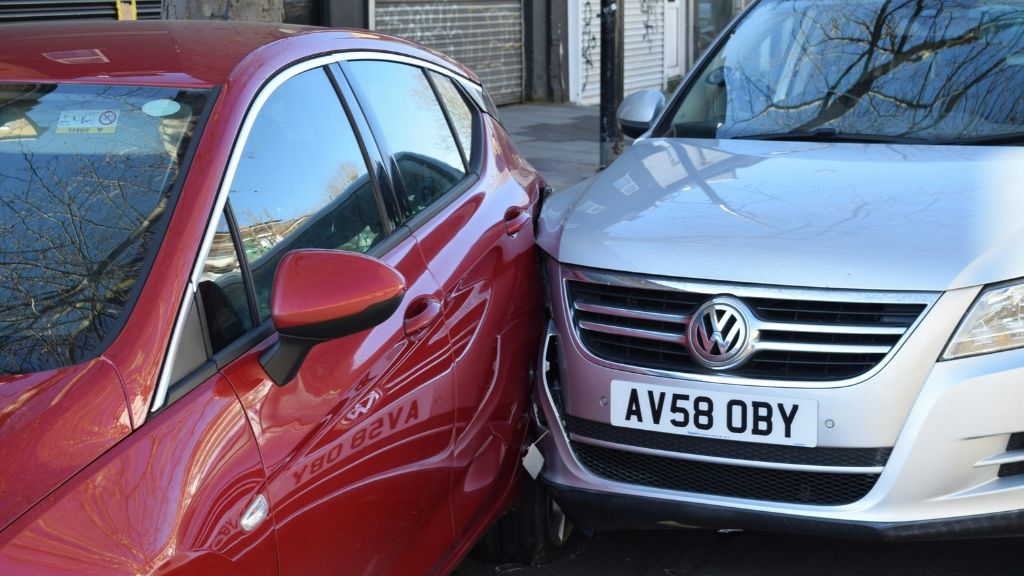
| Simple example: Your car’s IDV = Rs 8 lakh Car is stolen → Insurance pays you Rs 8 lakh Car is totalled in accident → Insurance pays you Rs 8 lakh Car is repaired (not total loss) → IDV does not matter for repair claims |
This is the critical insight most people miss: IDV only matters when your car is stolen or completely written off. For normal repair claims, the IDV does not affect how much you receive — the insurer pays the repair cost (subject to depreciation if you do not have Zero Dep cover). But if your car is totalled or stolen, you receive exactly the IDV — nothing more, nothing less.
How IDV is Calculated — The Formula
IDV is calculated as the manufacturer’s listed selling price (ex-showroom) minus depreciation for the car’s age:
| Car Age | Depreciation Applied | IDV Formula |
| New car (under 6 months) | 5% depreciation | IDV = Ex-showroom price × 95% |
| 6 months to 1 year | 15% depreciation | IDV = Ex-showroom price × 85% |
| 1 to 2 years | 20% depreciation | IDV = Ex-showroom price × 80% |
| 2 to 3 years | 25% depreciation | IDV = Ex-showroom price × 75% |
| 3 to 4 years | 35% depreciation | IDV = Ex-showroom price × 65% |
| 4 to 5 years | 45% depreciation | IDV = Ex-showroom price × 55% |
| Over 5 years | Negotiable between insurer and owner | Based on market valuation |
Real Example — Maruti Swift 2024 (2-Year-Old Car)
Maruti Swift ZXI AMT — Ex-showroom price when new: Rs 9.64 lakh. Car is now 2 years old (between 1-2 years = 20% depreciation). Standard IDV = Rs 9.64 lakh × 80% = Rs 7.71 lakh. If the car is stolen or written off today, the insurer pays Rs 7.71 lakh — not the Rs 9.64 lakh you paid when new.
The IDV Trap — Why People Set It Wrong

At renewal, comparison platforms like PolicyBazaar and InsuranceDekho show a range of IDV options — from minimum to maximum. The minimum IDV results in the lowest premium, so the platform often defaults to showing the cheapest option. Most buyers, seeing a lower premium for minimum IDV, select it without understanding the consequence.
| IDV Setting | Impact on Premium | Impact on Total Loss Claim | Verdict |
| Minimum IDV (20-30% below market) | Cheapest — saves Rs 200-500/year | Receives 20-30% less than market value — loses Rs 1-3 lakh | Dangerous |
| Accurate IDV (matches market value) | Moderate — Rs 200-500 more than minimum | Receives fair market value — no financial loss | Correct choice |
| Maximum IDV (10-15% above market) | Most expensive — Rs 300-700 more | Receives above-market value — but IRDAI rules may cap it | Generally unnecessary |
How to Set the Correct IDV — Step by Step
- Step 1: Find your car’s current market value — go to Cars24.com or CarDekho’s ‘Sell My Car’ section and enter your car’s details (year, variant, kilometres) to get its market resale value
- Step 2: At renewal, in the IDV selection field, set the IDV at or close to the current market value
- Step 3: The premium difference between minimum IDV and accurate IDV is typically Rs 200-600 per year — a tiny amount compared to the potential claim shortfall of Rs 1-3 lakh
- Step 4: For older cars (5+ years), negotiate with the insurer — for cars over 5 years, IDV is based on negotiation rather than the standard depreciation table
IDV for New Cars — Return to Invoice Cover
For new cars under 2 years old, standard IDV at the time of a total loss will still be less than what you paid — because IDV is calculated on ex-showroom price, not on-road price. You paid road tax, registration, and insurance as part of the on-road price. To get back what you actually paid, consider the Return to Invoice (RTI) add-on:
Return to Invoice (RTI) add-on: In case of total loss, the insurer pays the full on-road purchase price (invoice amount) instead of just the IDV. For a car where you paid Rs 11 lakh on-road but standard IDV would pay Rs 8.5 lakh, RTI recovers the full Rs 11 lakh. The add-on costs approximately Rs 1,000-2,800 annually and is available for cars under 2 years old.
| Also Read: How to Renew Car Insurance Online India 2026 | |
Frequently Asked Questions
Q: What is IDV in car insurance India?
IDV (Insured Declared Value) is the maximum amount your car insurance company will pay you if your car is stolen or becomes a total loss. It represents the current market value of your car for insurance purposes, calculated by applying a depreciation percentage to the manufacturer’s original selling price. For a 2-year-old car that originally cost Rs 10 lakh, the IDV would be approximately Rs 8 lakh (20% depreciation).
Q: What happens if IDV is too low in car insurance India?
If your IDV is set too low and your car is stolen or written off in an accident, you receive the lower IDV amount — not the actual market value of your car. For example, if your car’s market value is Rs 8 lakh but you set IDV at Rs 5.5 lakh to save Rs 400-600 on premium, you receive only Rs 5.5 lakh after total loss — a shortfall of Rs 2.5 lakh. This Rs 400-600 annual saving is not worth the potential Rs 2.5 lakh loss.
Q: How to calculate IDV for my car?
IDV formula: Ex-showroom price when new × (1 minus depreciation percentage for car’s age). Depreciation by age: under 6 months = 5%, 6 months-1 year = 15%, 1-2 years = 20%, 2-3 years = 25%, 3-4 years = 35%, 4-5 years = 45%. Example: Car bought for Rs 10 lakh, now 3 years old → IDV = Rs 10L × (1 – 0.35) = Rs 10L × 0.65 = Rs 6.5 lakh. For cars over 5 years, IDV is negotiated based on current market value.
Q: Should IDV be high or low?
IDV should match your car’s current market value — not minimum and not artificially inflated. Setting IDV close to market value (check Cars24 or CarDekho for current resale value) ensures fair compensation in case of total loss. The premium difference between minimum IDV and accurate IDV is Rs 200-600 per year. This small annual saving is not worth the risk of receiving Rs 1-3 lakh less than your car’s value in a total loss scenario. Always set IDV accurately.